
Walking a dog should feel like a short chat, not a tug‑of‑war. Yet many owners end up exhausted, and their pups keep pulling. This guide breaks the process into five easy steps so you can enjoy calm walks with your furry friend. We’ll cover the gear, the early practice, the basics of loose‑leash walking, how to add distractions, and what to do when things go wrong.
Step 1: Choose the Right Leash and Use
Before you even clip on a leash, pick gear that matches your dog’s size, breed, and training level. A standard flat leash made of nylon, 4‑to‑6 feet long, is the most reliable choice for beginners. It’s cheap, strong, and washes well. AKC explains that a sturdy metal clip is a must‑have for safety. For dogs that pull a lot, a front‑clip use can redirect pressure to the chest instead of the neck, protecting the spine and reducing pulling.
When you shop for a use, look for adjustable straps and a snug fit that lets you see the dog’s chest movement. Front‑clip models like the PetSafe Easy Walk or Ruffwear Front Range are popular because they give you control without choking the dog. BestFriends notes that a well‑fitted no‑pull use can prevent injuries to the front legs and spine.
Measure your dog’s girth by wrapping a soft tape around the chest just behind the front legs. Most manufacturers provide a size chart; if you’re between sizes, choose the larger one and tighten the straps. A loose use can slip off, while a too‑tight one may cause chafing.
Keep a spare leash for rainy days or if the first one gets chewed. A second leash also lets you switch between a short training lead and a longer line for recall work.
Step 2: Introduce the Leash in a Low‑Distraction Environment
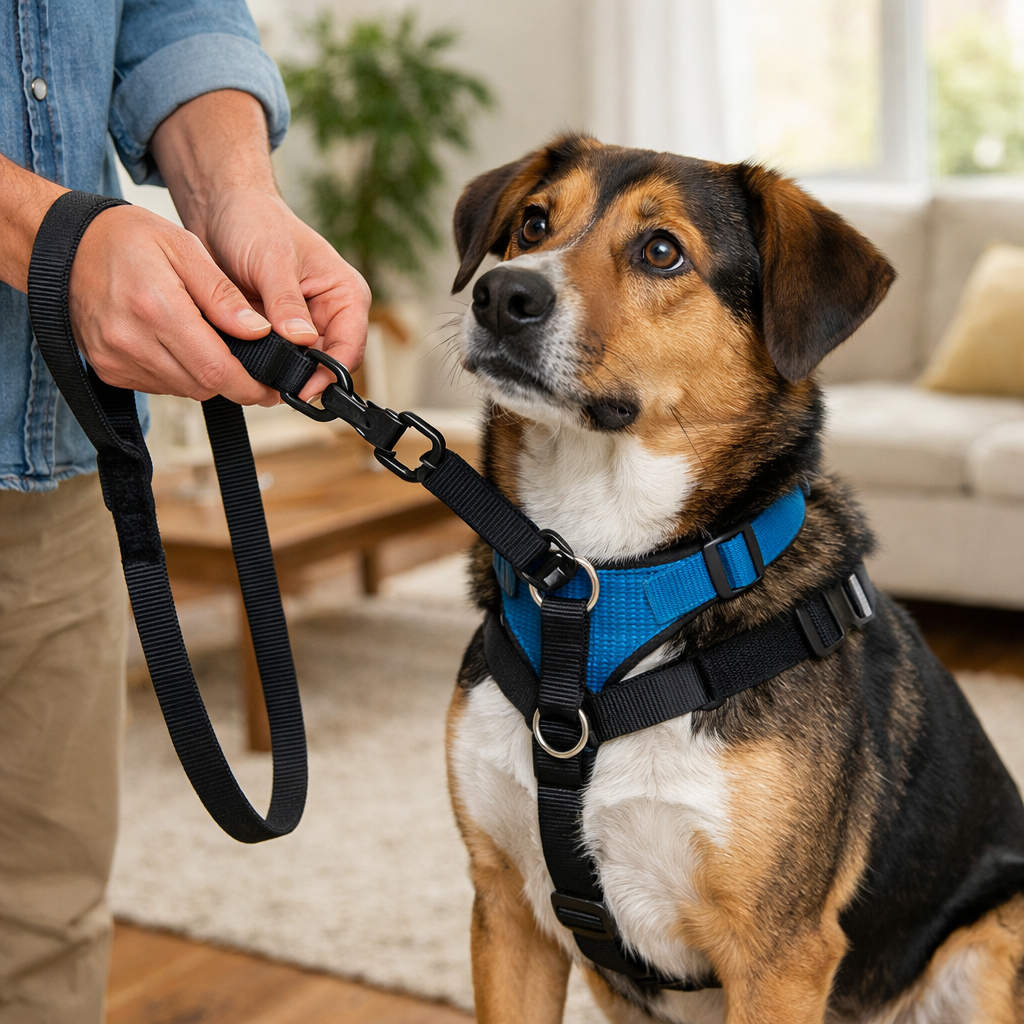
First, let your dog get used to the feel of the leash and use without any outside noise. A quiet hallway or empty room works best. Clip the leash on, then let the dog walk around freely for a minute or two. This lets the dog see that the leash isn’t a trap.
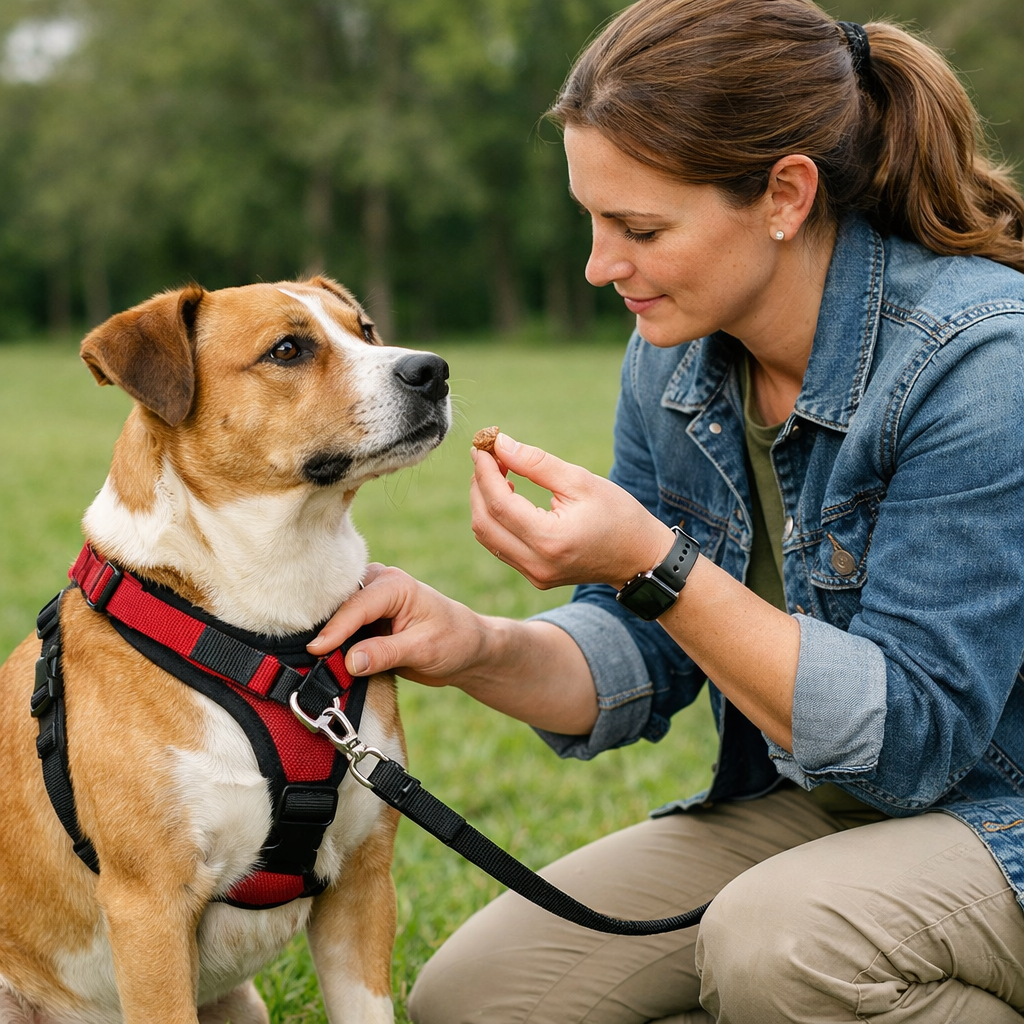
While the dog roams, keep treats in a hand‑held pouch. When the dog looks at you, say a short marker word like “yes” and give a treat. This builds a connection between the leash, your presence, and a reward.
Pick a side to walk on, most trainers use the left side. Hold the leash in the hand opposite the dog so you can reward close to the dog’s body. This prevents the dog from stepping over the leash to reach the treat.
If your dog tries to pull, stop walking. Wait until the dog looks back, mark the moment, and then resume. This teaches the dog that forward motion only happens when there’s slack.
After a few short sessions, you’ll notice the dog beginning to check in with you rather than sprint ahead.
For a deeper look at using treats as markers, on positive reinforcement dog training. It explains how a simple “yes” can speed up learning.
Step 3: Teach Loose‑Leash Walking Basics
Now that the dog is comfortable with the gear, start teaching the loose‑leash walk. Begin inside where you can control the environment. Hold the leash with a short grip and keep the slack loose. When the dog stays by your side, mark with “yes” and give a treat.
If the leash tightens, stop walking. Wait for the dog to release tension, mark, and then continue. This “stop‑and‑go” method teaches the dog that pulling stops the walk.
Use a high‑value treat, small pieces of cheese or chicken work well. Keep treat pieces the size of a pea so you can give many without overfeeding.
Practice for five minutes, twice a day. Short, frequent sessions keep the dog focused and prevent boredom.
As the dog gets better, slowly increase the distance you walk before giving a treat. This builds endurance and reinforces the idea that staying close earns rewards.
Wikipedia notes that positive reinforcement is the most effective way to shape behavior, and leash training is no exception.
Step 4: Gradually Increase Distractions and Practice Sessions
Once the dog walks nicely indoors, move the practice to a backyard or quiet street. The goal is to keep the same loose‑leash cues while adding mild distractions like a passing car or a neighbor’s cat.
Start with one new distraction at a time. For example, open a door and let a neighbor walk by. If the dog stays focused, reward heavily. If the dog looks away, use the “stop‑and‑go” method again.
Track progress in a simple notebook: date, environment, number of checks, and any slips. Seeing improvement on paper helps you stay consistent.
“A leash is a bridge between you and your dog. Build it strong, and the walk becomes a conversation.”
When you feel the dog can handle a busy park, add more dogs at a distance. Keep the leash short at first, then gradually give more slack as the dog remains calm.
For sizing tips that match your breed, see our dog size guide. A proper fit makes all the later steps smoother.
Step 5: Troubleshoot Common Problems and Reinforce Good Behavior
Even with solid practice, you may hit snags. The most common issue is the dog pulling when excited. The fix is to return to a low‑distraction setting, re‑establish the “stop‑and‑go” rule, and reward only when the leash is slack.
Another frequent problem is the dog ignoring the leash entirely and darting toward a scent. In that case, increase the reward value and add a verbal cue like “let’s go” right as you step forward. The cue pairs the movement with a command, helping the dog anticipate your direction.
If the dog shows signs of fear, ears back, tail tucked, reduce the leash length and keep sessions very short. Use calm, reassuring voice tones and reward any brave step forward.
FAQ
How long does it take to teach a dog to walk on a leash?
Training time varies by breed, age, and previous habits. Most dogs show steady progress after 4, 6 weeks of short, daily sessions. Some puppies may need a few months, while older dogs can learn faster if they have a strong desire to please.
Can I use a retractable leash for training?
Retractable leashes are not recommended for beginners. They encourage pulling because the dog can chase the moving cord. A fixed 4‑6 foot nylon leash gives you better control and clearer feedback.
What kind of treats work best for leash training?
High‑value treats should be soft, aromatic, and easy to chew quickly. Small bits of cooked chicken, cheese, or commercial freeze‑dried treats work well. Keep each piece the size of a pea to avoid over‑feeding.
Should I use a clicker instead of a word marker?
A clicker works fine if you already have one, but a simple word like “yes” is just as effective. The key is consistency, mark the exact moment the dog shows the desired behavior and follow with a treat.
How do I stop my dog from lunging at other dogs?
Practice the “watch” cue in a low‑distraction area first. When another dog appears, ask for eye contact, mark, and reward. Gradually increase the distance between the two dogs while keeping the leash slack.
Is a head halter a good tool for leash training?
Head halters can help strong pullers, but they require a period of acclimation. Pair the halter with positive reinforcement and never force the dog’s head to turn. If the dog shows stress, switch back to a front‑clip use.
What if my dog refuses to wear a use?
Let the dog sniff the use first, then reward for any contact. Put the use on for a few seconds, reward, and gradually increase the time. Patience and treats will build a positive association.
How often should I practice leash training?
Two short sessions per day, 5‑10 minutes each, are ideal. Consistency beats length; a brief, focused walk is more effective than a long, unfocused one.
Conclusion
Leash training is a step‑by‑step process that builds trust, safety, and fun. By picking the right gear, starting in a calm space, teaching loose‑leash basics, adding distractions gradually, and fixing problems as they arise, you’ll turn chaotic pulls into relaxed walks. Remember to keep sessions short, use high‑value treats, and stay patient. For the next skill, try our guide on how to teach a dog to sit, it reinforces the same reward principles and adds another useful command to your toolbox.