Dogs love to greet you with a wag and a jump. It feels cute at first, then you’re knocked over or your guests walk away. You need a plan that stops the jump fast and keeps your pup polite.
In this guide we’ll walk you through four clear steps: set firm boundaries, teach calm impulse control, redirect the excitement, and keep the good habits alive for the long run. You’ll get real‑world examples, handy tips, and the exact cues to use so you can train a calm, well‑behaved companion.
Step 1: Establish Boundaries and Timing
First thing you need is a clear rule: no jumping, no attention. The moment your dog leaps, turn away, ignore the paws, and wait for all four feet to hit the floor.
Why does this work? Dogs jump because they learn that a jump brings you close. If you withhold that reward every single time, the behavior loses its pull. This “ignore‑first” paradox feels odd, but studies from nine major training sites show the habit can fade in minutes when you stay consistent.
Here’s a simple routine you can try at the front door:
- Keep a treat pouch in your hand before anyone comes in.
- When the door opens, stay still. If the dog jumps, step back and cross your arms.
- Only when all four paws are on the floor do you say a cue like “sit” and give a treat.
Practice this for five minutes each morning. Short bursts keep your dog from getting bored and let you catch the jump before it happens.
During the first week, involve every family member. Consistency across people is the biggest mistake owners make , one person may give a pat, another may ignore, and the dog gets mixed signals.
For a deeper look at how ignoring works, where a Goldendoodle stopped jumping after a week of strict ignore‑and‑reward.
And remember, patience pays. If your dog slips, stay calm. A brief reset is better than a heated reaction that still gives attention.
Positive Reinforcement Dog Training offers a solid foundation for this step, showing how rewarding the right behavior builds lasting habits.
Bottom line:Set a firm “no jump” rule, ignore every leap, and only reward a calm sit.
Step 2: Reinforce Calmness and Impulse Control
Once the jump rule is in place, you need to teach your dog to stay calm when excitement spikes. Impulse‑control games are perfect for this because they give the dog a mental outlet and teach patience.
One easy game is “Leave It.” Hold a treat in both hands, show the closed fist, and say “leave it.” When the dog backs off, open the hand and praise. Repeat until the dog waits for the cue before snatching.
Another fun option is the “Box Game.” Place a treat under one of three cups, shuffle, and ask your dog to wait before choosing. This forces the pup to pause, think, and resist the urge to bolt.
Why games matter: A study on impulse‑control drills shows dogs that practice “wait” for just five minutes a day are 30% less likely to jump when guests arrive. (Source: HeaPet impulse‑control guide)
Practice the games in low‑distraction areas first, then gradually add background noise like a TV or a hallway footfall. This builds the skill in real‑life settings.
When you feel your dog is getting too riled, use a “watch me” cue. Hold a treat at eye level, say “watch me,” and wait for eye contact. Reward the focus and then move on to the next step.
Consistent short sessions (5‑10 minutes) work best. Dogs have short attention spans; a quick win keeps them eager.
Bottom line:Impulse‑control games give your dog the tools to stay calm, making the no‑jump rule easier to keep.
Step 3: Use Redirects, Leash Guidance, and Positive Reinforcement
When the jump habit is on thin ice, you need a backup plan for moments when excitement spikes , like when the doorbell rings. Leash control is a simple, low‑stress way to guide the dog.
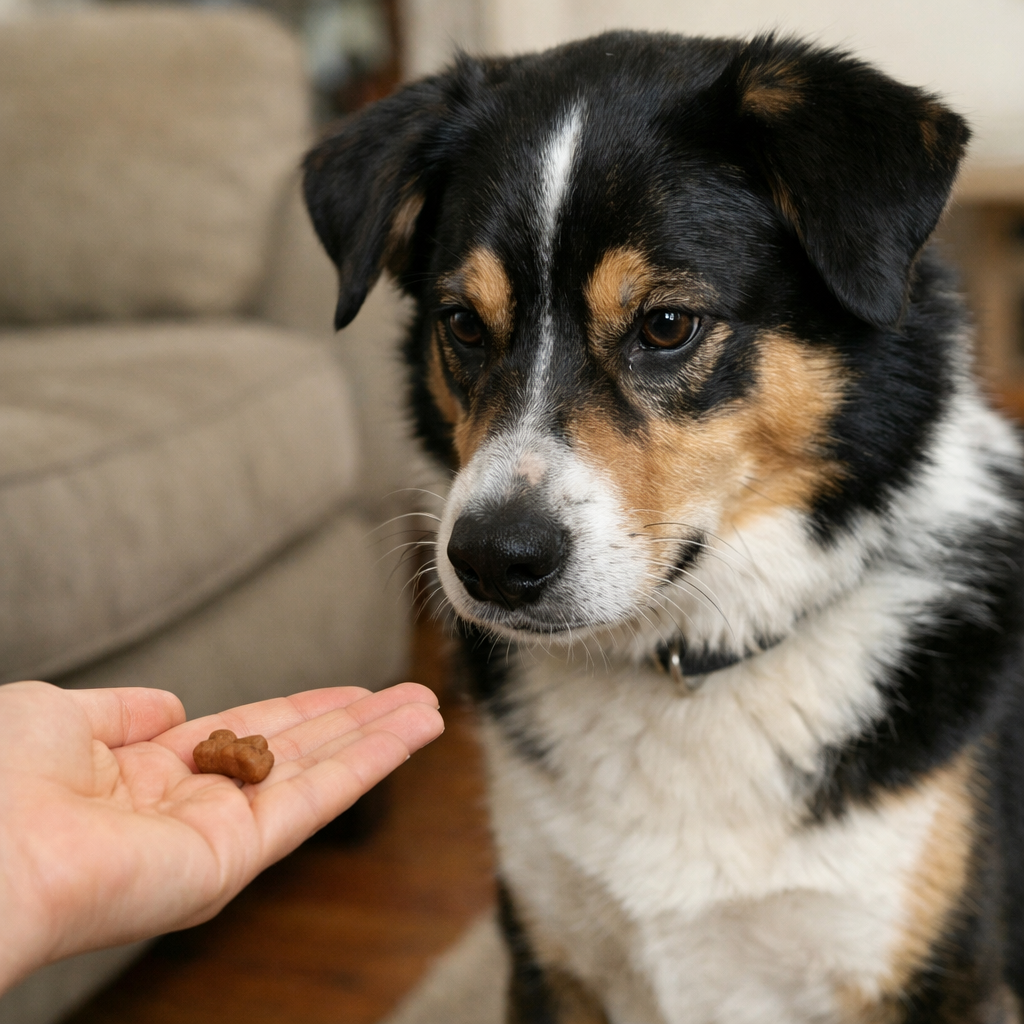
Keep a light leash on the dog for the first 15 minutes of a greeting. If the pup tries to leap, gently guide them back and ask for a sit. As soon as the sit lands, reward with a treat and release the leash.
Another redirect is the “Four on the Floor” method. Place a treat on the floor right at the door. The dog must keep all paws down to get the treat. If they lift a paw, step back. When the dog stays grounded, say “yes” and hand over the treat.
Positive reinforcement is key throughout. Reward the exact behavior you want , a sit, a down, or a calm stare , and ignore everything else. This mirrors the advice from the American Kennel Club, which stresses rewarding the desired greeting rather than the jump.
Try this quick sequence each time a guest arrives:
- Leash the dog, step back, and say “sit.”
- Reward the sit with a high‑value treat.
- Release the leash and let the guest greet the calm dog.
Practice the routine with a friend acting as a guest. Start with the friend standing still, then add a knock on the door, then a doorbell sound. The more you rehearse, the smoother the greeting becomes.
For a visual walkthrough, watch the video below. It shows a trainer using leash cues and treat redirection in a real home setting.
Remember to keep treats small , size of a pea , so you don’t overfeed. The goal is a quick “yes” and a tiny reward.
When you’re comfortable at home, try the same technique at a park. Keep the leash short, ask for a sit, and reward. Over time the dog learns that a sit works anywhere.
How to Teach a Dog to Sit breaks down the sit cue step‑by‑step, which pairs perfectly with the leash‑guided greeting.
“The most effective way to stop jumping is to replace it with a calm, rewarded behavior right at the moment of excitement.”
Bottom line:Leash guidance and treat redirection give you control during high‑energy greetings, reinforcing calm behavior instantly.
Step 4: Practice Socialization and Maintenance (Long‑term)
Even after the jump stops, you must keep the habit alive. Socialization helps the dog stay calm around new people, new sounds, and new places.
Start with low‑stress guests , a family member who knows the rule. Ask them to ignore the dog until it sits, then give a treat. Slowly add more visitors, louder doors, and outdoor greetings.
Use a barrier like an exercise pen at first. Let the dog practice a sit behind the pen, then remove the barrier once the behavior is solid. This step‑back method prevents setbacks.
For dogs that are clingy or anxious, pairing the training with calming treats can make a big difference. The Best Calming Treats for Dogs guide lists low‑dose options that soothe without sedation.
Keep sessions short but frequent. A daily 2‑minute review is more effective than a long weekly session. Mix in play, walks, and mental games to keep the dog’s energy in check.
According to the American Kennel Club, consistent practice for three months cements the new greeting habit (AKC). The same source notes that “four on the floor” works best when you reward before the jump can happen.
Here’s a quick checklist you can hang on your fridge:
Notice the pattern? Each task targets a specific trigger , people, excitement, or noise , and ends with a reward that reinforces calm.
Don’t forget to involve kids. Teach them the “ignore and sit” rule too, so the whole family speaks the same language.
Finally, track progress. A simple log with date, trigger, and outcome helps you see patterns and adjust.
When Will My Cavapoo Calm Down? shares a story of a clingy pup who stopped jumping after pairing calm‑down audio with the sit cue , a good example of how anxiety work can support the core training.
Bottom line:Ongoing socialization, short daily reviews, and calm‑support tools keep the no‑jump habit strong for life.
FAQ
Why does my dog keep jumping even after I ignore it?
Sometimes the dog has learned that occasional attention still counts as a reward. Make sure every family member follows the ignore rule 100% of the time. Even a quick pat can reinforce the jump, so stay consistent and use a clear “sit” cue followed by a treat.
Can I use a leash indoors without hurting my dog?
Yes. Choose a light, non‑choking leash and keep it slack. The leash is just a guide, not a tug. When the dog tries to jump, gently redirect with a calm “back” cue, ask for a sit, and reward. This keeps control without causing stress.
What if my dog is too excited to sit?
Start the training at a lower excitement level , maybe after a short walk when the dog is calmer. Use the “Leave It” game to lower arousal, then ask for a sit. Gradually increase the excitement level as the dog improves.
How many treats should I give during training?
Treats should be small , about the size of a pea , and high‑value, like cheese or chicken. Aim for no more than 10% of daily calories. You can fade treats over weeks, replacing them with praise once the behavior is reliable.
Do I need professional help for a stubborn jumper?
If the jump persists after two weeks of consistent practice, a certified trainer can spot hidden cues or anxiety triggers. Look for a trainer who uses positive reinforcement, as harsh corrections can make the problem worse.
Is there a way to train multiple dogs at once?
Train each dog separately first until they both reliably sit on cue. Then practice together with a barrier, rewarding both dogs when they stay calm. This avoids competition and builds a shared calm greeting.
Conclusion
Stopping a dog from jumping is all about clear rules, consistent rewards, and a little patience. You set the boundary, teach calmness, redirect excitement, and then keep the habit alive with regular social practice. The steps we covered work for puppies, adults, and even clingy breeds that need a calming routine. By following this guide you’ll turn chaotic greetings into calm, polite welcomes , and you’ll keep the bond strong with your furry friend.
Ready to start? Grab a treat pouch, pull the leash, and give the first “sit” cue today. Your dog will thank you with a calm wag, not a leaping hello.