Ever notice your pup glued to your side like a furry shadow? It can feel cute, but it can also drive you nuts. In this guide we’ll break down why does my dog follow me everywhere, what’s normal, and what needs attention.
We’ll dig into instinct, anxiety, training, health, and give you practical steps to calm the clinginess. By the end you’ll know how to spot the real cause and fix it without stress.
The Instinctual Need for Pack Bonding
Dogs are pack animals at heart. In the wild wolves stick close to the family for safety, food, and learning. That same drive lives in our pets. When you move, they want to stay in the same spot because the pack is moving.
Scientists now know that the old “alpha” myth isn’t real. Wolf researchers like L. David Mech show that leaders sit near the back of the group, not ahead of it. This means dogs don’t chase a rank; they want security.
Because they see you as part of their pack, they follow you to stay protected. A simple walk to the kitchen can feel like a journey through unfamiliar terrain, so they stay close.
Imagine a puppy that just lost its mother. It will cling to the nearest warm body , you. That imprint can last months, even years.
Pack bonding also shows up in breed history. Working breeds such as shepherds were bred to stay by a herder’s side. That heritage makes them naturally inclined to follow.
Training Buster’s guide on why are Cavapoos so clingy? explains how breed traits can amplify the pack urge.
When the urge is strong, simple tricks help. Try a “go to place” cue before you leave a room. Reward the stay and then walk away. Over time the dog learns it’s okay to be apart.
But don’t mistake a healthy pack bond for a problem. Most dogs will follow you around the house, especially when you’re cooking or watching TV. That’s just their way of staying in the group.
Bottom line:The instinct to stay with the pack is natural, and a gentle “stay” cue can give them confidence to be apart.
Separation Anxiety vs. Normal Following Behavior
Not every clingy act means anxiety. Normal following is calm, steady, and ends when you’re out of sight. Anxiety spikes when the dog shows stress signs as you prepare to leave.
Typical signs of anxiety include pacing, whining, drooling, or trying to escape. A calm follower will simply sit and watch you, maybe wag a tail.
Researchers at the National Library of Medicine note that early intervention can stop a mild cling into full‑blown anxiety.
One practical step is the “5‑minute rule.” Start by leaving your dog alone for five minutes, then slowly add five more each day. Pair the return with a calm greeting and a treat.
Another tip is to use a “pre‑leave cue.” Pick up your keys, then sit down and ignore the dog for a minute before you actually leave. This breaks the strong link between the cue and the departure.
“The big difference between separation anxiety and a Velcro dog is anxiety itself.”
When you spot the warning signs, act fast. A brief vet check rules out pain, then start the gradual alone‑time plan.
Bottom line:Spotting panic vs. calm following tells you whether you need anxiety work or simple independence training.
Learned Behavior and Positive Reinforcement
Even a well‑bred pack lover can learn to follow because you reward it. Every time you walk by, you pet, talk, or give a treat. That creates a loop.
Dr. Rachel Barrack explains that puppies imprint on owners and link attention to proximity. If the dog gets a kiss or a snack each time it follows, the behavior sticks.
Positive reinforcement works both ways. It can build good habits, but it can also cement clingy ones.
To break the loop, start ignoring the follow. When the dog walks up, wait a few seconds before you give any affection. Only reward when the dog is calm and not glued to your leg.
Training Buster’s Positive Reinforcement Dog Training guide walks you through how to shift rewards from proximity to independent actions.
Here’s a step‑by‑step plan:
- Set a comfy mat near the door.
- When you’re about to walk, cue “go to mat”.
- If the dog stays, click and give a treat.
- Gradually increase the time the dog stays while you move to another room.
- Phase out treats, keep praise.
Practice this when you’re getting a snack or a drink. The dog learns that staying isn’t a loss.
Remember, consistency beats intensity. A short daily session works better than a long, irregular one.
After a week you’ll notice the dog waits for a cue rather than lunging at you.
Bottom line:Positive reinforcement can both cause and cure following; shift rewards to independent actions.
Health and Safety Reasons for Following
Sometimes a sudden surge of clinginess signals a health problem. Dogs that lose sight or hearing may stick close because the world feels unsafe.
Joint pain, arthritis, or a stomach upset can also make a dog want to be near you for comfort.
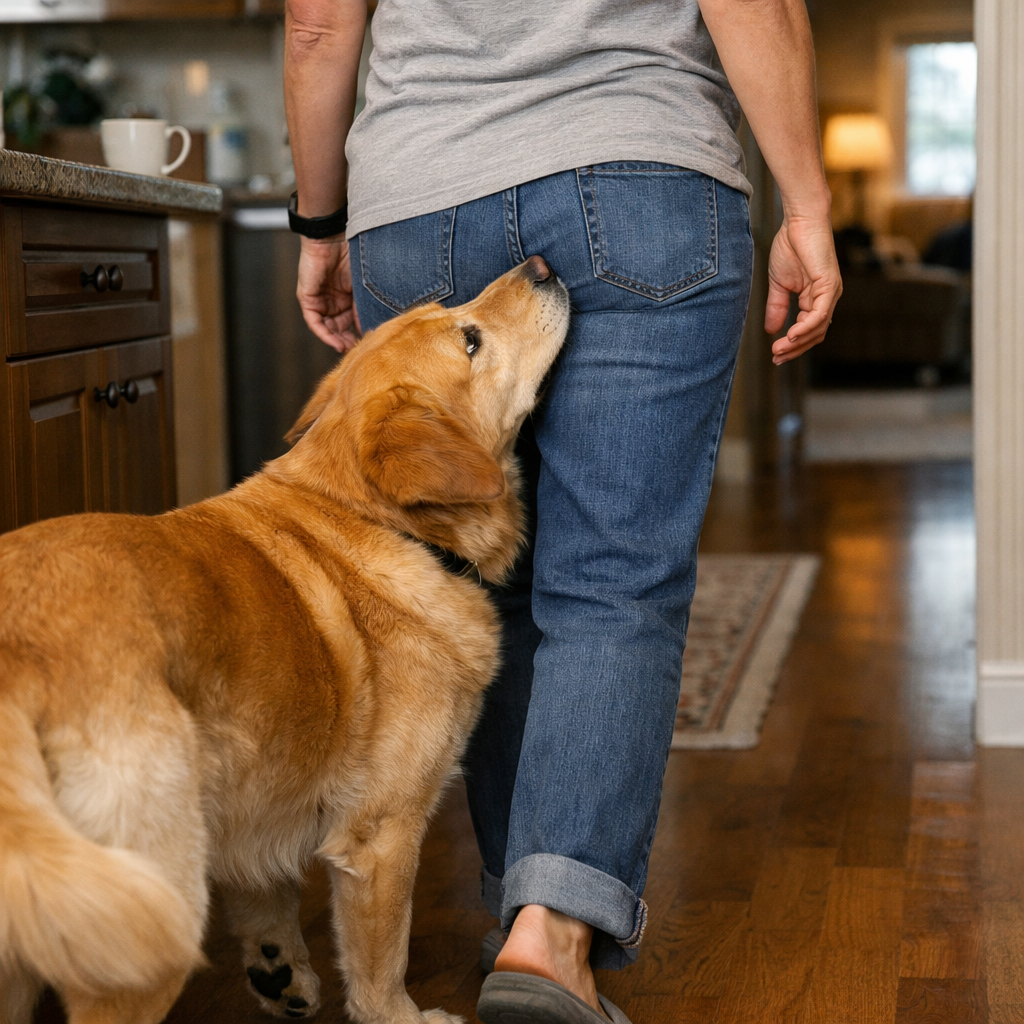
One red flag is a change in the pattern. If a normally relaxed dog becomes a Velcro follower overnight, think health first.
Veterinarians often suggest a quick check‑up when the behavior spikes. Simple blood work or a vision test can reveal hidden issues.
Training Buster’s article on can Cavapoos be left alone? notes that anxiety can hide behind a physical need, so a vet visit rules out pain before you start training.
Practical steps:
- Observe for limping, whining, or changes in appetite.
- Check eyes and ears for discharge or cloudiness.
- Ask your vet about a wellness exam if you see a shift.
While you wait for the vet, keep the dog safe by limiting stairs and providing a soft bed.
“A dog that suddenly becomes very clingy may be suffering from a physical ailment and keeping you in reach for comfort.”
After the health check, if no issue is found, you can focus on training. If a problem is found, treatment often reduces the clinginess as the dog feels better.
Bottom line:Rule out pain or sensory loss first, then apply training if the dog is healthy.
FAQ
Why does my dog follow me to the bathroom?
Often the dog sees a bathroom break as a chance to get a quick potty stop. The scent of you after washing signals a fresh spot. Offer a brief bathroom break before you settle into the room, and the dog will stop using you as a bathroom cue.
Can I train my dog to stay in another room while I cook?
Yes. Use a “go to mat” command, reward the dog for staying while you move to the kitchen, and gradually increase the distance. Start with a few seconds and add time each day. Praise calmly when the dog stays.
Is it normal for my senior dog to follow me everywhere?
Senior dogs may follow more if they’ve lost some sight or hearing. First, get a vet check to rule out sensory loss. Then give them a comfy spot close to you and reward calm staying. Small, frequent walks help keep confidence.
My dog gets anxious when I pick up my keys. What should I do?
That’s a classic pre‑leave cue. Try the “ignore the cue” trick: pick up the keys, then sit down and ignore the dog for a minute before actually leaving. Pair the calm return with a low‑key treat.
How can I tell if my dog’s following is just affection?
If the dog stays calm, wags, and doesn’t show stress signals like pacing or whining, it’s likely simple affection. Reward occasional independent rests and keep the overall routine relaxed.
Do certain breeds follow more than others?
Yes. Working and herding breeds were bred to stay by a human’s side. They naturally have a higher drive to follow. Knowing your breed’s tendency helps you set realistic expectations.
Conclusion
We’ve unpacked why does my dog follow me everywhere, from the deep‑rooted pack instinct to learned rewards, hidden health flags, and anxiety. Spotting the exact cause lets you choose the right fix , a quick vet visit, short independence drills, or a change in how you reward proximity.
If you want a step‑by‑step plan for building calm independence, check out Training Buster’s resources on positive reinforcement and anxiety management. With the right tools, your dog can enjoy freedom while still feeling safe.