Dogs don’t speak, but they show love in ways we can see. If you know the clues, you’ll feel more sure of the bond you share. In this list we break down the five biggest signs your dog loves you, why they matter, and how you can read them better.
We’ll walk through each sign, give real examples, and add tips you can try today. By the end you’ll be able to spot love in everyday moments.
1. Tail Wagging When You Arrive , Warm Greeting
When you walk through the door and the dog’s tail starts to swing fast, that’s a classic love cue. But not every wag means the same thing. Vets say the speed, height and direction of the wag tell a story. A fast, wide wag that sweeps up and down shows joy and confidence. A slower, low wag may just be a polite hello.
Scientists have found that dogs wag more to the right when they feel happy or confident, and to the left when they are scared. So a right‑side sweep as you step in is a good sign they feel safe with you.
Why does this matter? When a dog greets you with a happy wag they are releasing oxytocin, the same “love hormone” humans get when they hug. It builds a stronger bond each time you meet.
Imagine you come home after work and your pup runs, jumps and wags like a fan. That burst of energy is more than just excitement for a walk; it’s a signal they missed you.
But keep an eye on the context. If the wag comes with a stiff body or a growl, the dog may be nervous. In those cases the wag is a “pause” signal, trying to end the interaction without conflict.
Training Buster often reminds owners to pair a warm greeting with a gentle pet. The touch tells the dog that the happy wag is welcome and safe.
Bottom line:A joyful, full‑body wag when you come home means your dog is happy to see you.
2. Soft Eye Contact , Trust and Affection
Dogs that hold a soft gaze on you are sharing a deep bond. In the lab, owners and dogs that stare gently at each other see a spike in oxytocin for both sides. That chemical boost makes both feel closer.
The study from the University of Tokyo showed that a calm, steady gaze lasting a few seconds triggers the oxytocin rise. It’s not a stare of dominance; it’s a look of love.
When your pup looks at you while you’re sitting, it’s a sign they feel safe. They’re not trying to read your mind; they’re sharing a moment that builds trust.
Watch the ears too. Soft eyes with relaxed ears mean the dog is calm. If the ears are pinned back, the stare may be a warning.
One real‑world example: a rescue dog named Bella would often sit by the couch and meet my gaze while I read. Over weeks, her eyes stayed soft and she began to cuddle more often. The trust grew without a word spoken.
Want to use this cue? Try a calm sit‑stay routine. Ask your dog to sit, then hold eye contact for three seconds, then praise. You’ll see the bond grow.
Training Buster notes that eye contact works best when both sides are relaxed, not during play or when the dog is excited.
Why are Cavapoos so clingy? This article explains how some breeds naturally hold longer looks, showing that breed traits can boost this sign.
Bottom line:When your dog looks at you calmly, it’s a powerful love signal.
3. Gentle Nudges with the Nose , Saying “I’m Here”
A light push with the nose is more than a hello. It’s a way dogs say they trust you enough to be close. Puppies nuzzle their mother to get milk; grown dogs nuzzle people to get comfort.
Research from MyWoof notes that nudging often happens when a dog feels safe and wants to share space. It can also be a request for attention, food or play.
Think about the timing. A nudge while you’re on the couch usually means the dog wants a pet. A nudge before a walk may be a cue that they’re ready for a stroll.
“Nudging is the canine version of a gentle hand on the shoulder.”
Some breeds use the nose to herd. A Border Collie may nudge you toward a ball. That instinct still shows they see you as part of the pack.
If the nudge becomes frequent and the dog seems anxious, it could be a sign they need more routine or calming help. Offering a chew or a puzzle toy can calm the urge.
Training Buster suggests rewarding a gentle nuzzle with a calm pet and a soft word. That tells the dog the behavior is okay and builds trust.
In a real home, Max the lab would nuzzle his owner’s hand every time the phone rang. The owner learned that a quick pet and a treat kept Max calm during the stressful sound.
How to Properly Play Tug of War with Your Dog explains how gentle nudges can be a cue for wanting interactive play.
Bottom line:When your dog nudges you with its nose, it’s saying it feels safe and wants connection.
4. Lying on Their Back Near You , Total Trust
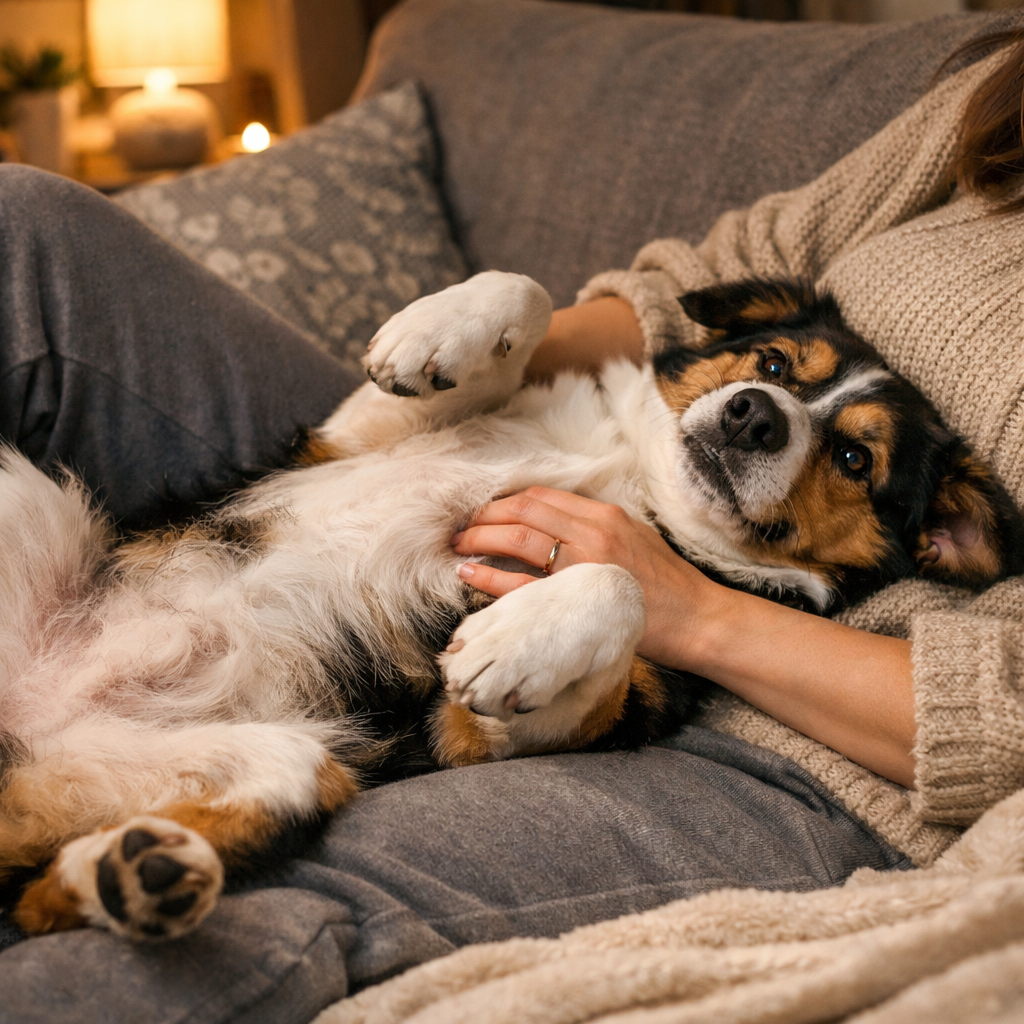
When a dog rolls onto its back and lies close to you, it’s showing total trust. The belly is a vulnerable spot, so exposing it means the dog feels safe.
Scientists say that dogs who feel secure release more dopamine, the brain’s reward chemical. That makes the act of rolling over a happy moment for both dog and owner.
Watch the context. If your dog rolls over when you sit on the floor, it may be an invitation to belly rubs. If it rolls over during a thunderstorm, it may be seeking comfort.
Real life: Luna the shepherd would curl up on the carpet, roll onto her back, and rest her head on my lap while I read. Over weeks, that position became our favorite cuddle spot.
One tip: keep the area warm and safe. A soft blanket encourages the dog to stay relaxed and enjoy the pose.
Training Buster notes that belly exposure can also be a sign of play invitation. If the dog’s tail is wagging while on its back, it may want a game.
Remember the dog’s breed. Breeds like Greyhounds often lie on their side rather than back, but the trust cue is the same , a relaxed, vulnerable pose.
Bottom line:Lying on its back close to you is a strong sign of love and security.
5. Following You Around , Constant Companionship
When a dog trails you from room to room, it’s a sign they want to be near you all day. This behavior shows they see you as part of their pack.
Freshpet’s research found that dogs who follow their humans show higher oxytocin levels, meaning they feel more attached.
Why does this happen? Dogs are herd animals. In the wild, staying close to the pack protects them from danger. At home, you become the pack.
Practical tip: If your dog follows you to the kitchen, greet them with a calm voice and a short pet. That reinforces the bond without encouraging clinginess.
Watch for over‑following. If the dog barks when you step out of a room, it may be anxiety. In that case, give them a puzzle toy to keep busy.
Real example: Buddy the beagle would sit by the door, then trot after me to the garden. Over months, he learned that a quick pat and a treat kept him calm when I left for work.
Training Buster advises mixing short solo time with play sessions. That keeps the dog happy without becoming overly dependent.
Bottom line:A dog that constantly trails you is expressing deep attachment and love.
How to Choose the Best Signs to Trust
Not every sign means the same thing for every pup. Use this quick checklist to decide which clues matter most for your dog:
- Is the behavior calm or frantic? Calm actions usually mean trust.
- Does the sign happen in many situations? Frequent signs are more reliable.
- Do you see a mix of body language (tail, ears, eyes) supporting the sign? Multiple cues strengthen the message.
- Is the dog’s health good? Pain can change behavior, so rule out medical causes.
Match the checklist to daily moments. If a sign passes, you’ve likely got a love cue.
FAQ
What does a fast tail wag tell me?
A fast, wide wag that sweeps up and down usually means pure joy. It shows the dog feels safe and happy to see you. Pair it with relaxed posture for a solid love sign.
Can a dog love me if it rarely makes eye contact?
Yes. Some dogs are shy or have vision issues. Look for other cues like a soft nuzzle or following you. Combine signs to get the full picture.
Why does my dog nuzzle me when I’m on the couch?
The nuzzle is a gentle request for closeness. It means the dog trusts you and wants to share space. Reward it with a calm pet to keep the bond strong.
Is it normal for my dog to follow me into the bathroom?
It’s common. Dogs see you as the pack leader, so they want to stay close. If it becomes anxiety‑driven, give the dog a chew toy to focus on.
What should I do if my dog rolls onto its back and looks nervous?
If the dog’s body seems tense, it may be using the position to ask for comfort. Offer a soft blanket and a calm voice. Avoid forcing belly rubs.
How can I tell if my dog’s eye contact is friendly?
Friendly eye contact is soft, steady, and lasts a few seconds. If the ears are relaxed and the dog’s tail is low, it’s a sign of trust. A hard stare can be a warning.
Do all breeds show these love signs the same way?
No. Breeds differ in tail style, eye shape and herd instincts. For example, Greyhounds may hold their tail high, while Beagles keep it low. Adjust your reading to the breed’s typical body language.
Conclusion
We’ve covered the five biggest signs that your dog loves you: a happy wag, soft eye contact, a gentle nuzzle, a relaxed belly‑up pose, and constant companionship. Each cue tells a story of trust, safety and affection. By watching the whole body, not just one part, you’ll read your dog’s love language better.
If you want more tips on building a strong bond, on how to shower your dog with affection. It dives deeper into daily habits that boost the bond.
Remember, love grows with small, consistent moments. Keep an eye on the signs, reward the good cues, and enjoy the special bond you share.