Dogs love to explore, sniff, chew, and solve puzzles. When those instincts go unmet, boredom sneaks in and mischief follows. The good news? You can turn ordinary moments into brain‑boosting play with a handful of simple activities. Below we break down five tried‑and‑true enrichment ideas, each with step‑by‑step tips, pros, and pitfalls, so you can pick the perfect fit for your pup.
Ready to keep your furry friend sharp, calm, and entertained? Let’s dive in.
1. Interactive Puzzle Toys , Boost Brain Power
Puzzle toys are more than chewable fun; they’re mental gym equipment for dogs. According to Rover’s deep‑dive on puzzle toys, these gadgets engage a dog’s nose, paws, and problem‑solving muscles, helping to curb anxiety and destructive habits.
Start simple. A beginner‑level treat‑dispensing ball asks your dog to roll the toy until a small opening releases a bite‑size snack. As confidence builds, graduate to multi‑step puzzles like the Nina Ottosson Worker Dog Toy, which requires twisting, sliding, and popping actions. The key is to match the difficulty to your dog’s drive. Food‑motivated pups thrive on treat‑based challenges, while play‑focused dogs may prefer a toy that bounces unpredictably, like the Omega Paw Tricky Treat Ball.
Why do these toys work? They tap into the natural foraging instinct. Dogs that would otherwise dig in the backyard or chew shoes get a constructive outlet. Plus, the mental effort burns calories, giving a gentle workout on days when a long walk isn’t possible.
When selecting a puzzle, consider durability. Heavy chewers need rubber‑bound toys like West Paw’s Qwizl, which can survive aggressive bites. Smaller or senior dogs benefit from softer silicone or fabric puzzles that won’t strain teeth.
Integrate the toy into a routine. Offer it after a short walk or before bedtime to help your dog wind down. Rotate toys weekly to keep novelty fresh.
Bottom line:Choose a puzzle toy that matches your dog’s motivation and chew strength, and use it regularly to keep boredom at bay.
2. Scent Work Games , Engage Their Nose
Scent is a dog’s superpower. The American Kennel Club notes that nose work lets dogs channel their natural sniffing drive, turning a simple search into a confidence‑building workout.
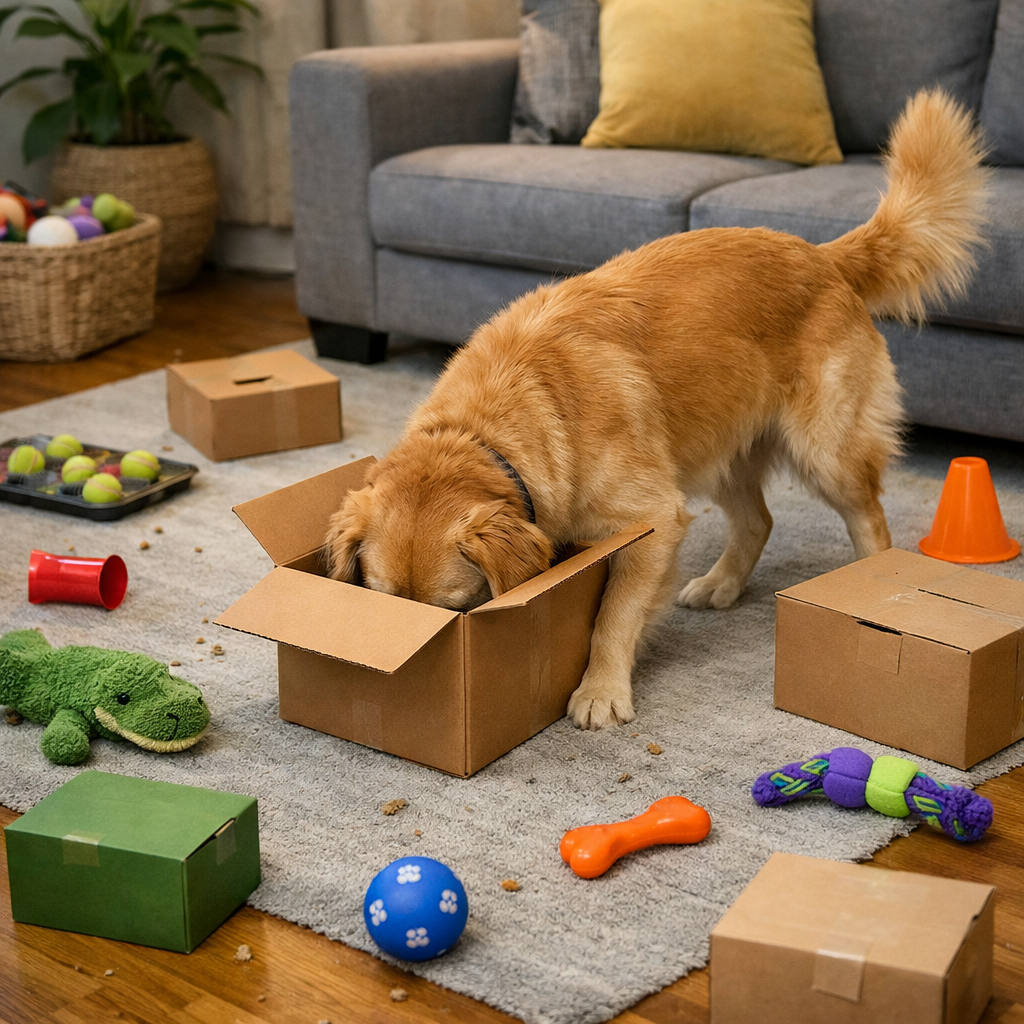
Begin with household items. Hide a handful of treats under three plastic cups, shuffle them, and let your dog point out the tasty cup. Once they get the hang of it, graduate to a “sniff scavenger hunt”: place treats or a favorite toy in various rooms, encouraging the dog to use their nose to locate each hidden treasure.
For a structured approach, try K9 Nose Work. The sport starts with basic odors like birch oil and progresses to more complex scent combos. It’s inclusive, senior dogs, puppies, and those with limited mobility can all participate because the only equipment needed is a scent source and a few containers.
Why scent work matters: sniffing triggers deep, calming breaths, which can lower heart rate and reduce stress. It also offers a mental challenge that tires the brain without taxing the joints.
To keep sessions fresh, vary the scent (e.g., a dab of vanilla extract) and the hiding spots (under a couch cushion, inside a rolled towel). If your dog is especially motivated by food, use high‑value treats; otherwise, a beloved toy works just as well.
Safety tip: always supervise the area to ensure no small objects are left that could be swallowed.
Bottom line:Use everyday items to create scent challenges that keep your dog’s nose busy and mind calm.
3. DIY Agility Courses , Fun Physical Challenge
Agility lets dogs burn energy while honing coordination. VCA Hospitals explains that agility combines speed, balance, and obedience, mirroring the natural hunting instincts of wild canines.
Set up a backyard course with inexpensive items: use a sturdy broom laid across two chairs for a jump, a hula hoop for a tunnel, and a ladder laid flat for a weave. Mark start and finish lines with garden stakes. Keep jumps low at first, especially for puppies or senior dogs, to protect developing joints.
Training tip: teach a cue like “up” for jumps and “through” for tunnels. Use positive reinforcement, praise or a quick treat, each time the dog follows the cue correctly. Gradually increase difficulty by raising jump heights or adding more obstacles.
Safety first. Before launching a full session, have a vet check that your dog’s joints are healthy, especially for high‑impact breeds. For young dogs, keep the course low‑impact; VCA recommends avoiding jumps higher than a few inches until the dog is fully grown.
Agility also strengthens the human‑dog bond. You’ll be the guide, using hand signals and voice cues, which improves communication and trust.
Rotate obstacles every few weeks to keep the routine exciting. Mix in obedience drills, like “sit” before a jump, to add mental layers.
Understanding joint development in dogs
Bottom line:Build a safe, adaptable course at home to give your dog a full‑body workout and sharpen obedience.
4. Food‑Dispensing Toys , Combine Play and Feeding
Feeding time can double as brain work. UpDogShop notes that food‑dispensing toys slow eating, aid digestion, and keep dogs occupied for long stretches, which reduces boredom‑driven chewing.
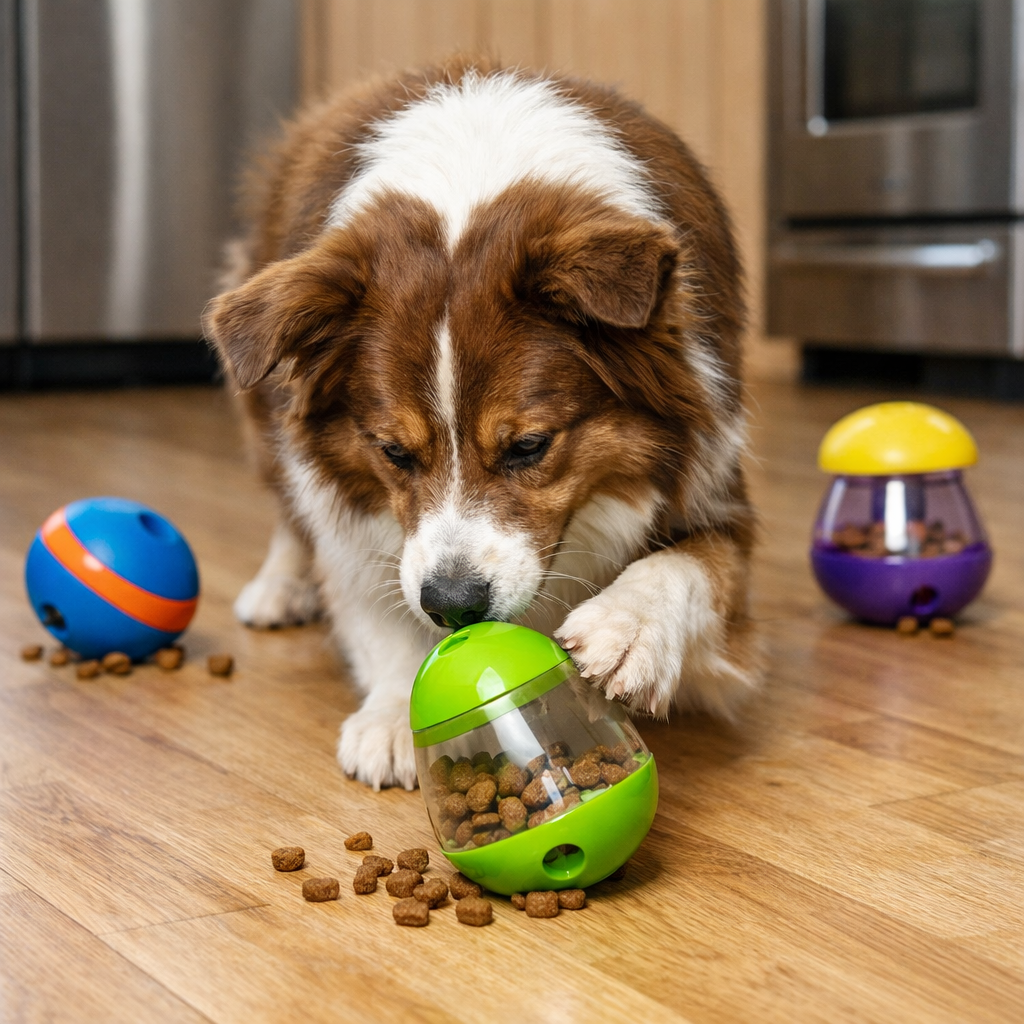
Start with a classic KONG. Fill it with a mix of kibble, wet food, and a dab of peanut butter. Freeze it for an extra challenge. The dog must work with its tongue and paws to extract the morsels, turning a meal into a puzzle.
For more complex tasks, try a treat‑ball that rolls and bounces unpredictably. The Omega Paw Tricky Treat Ball, for example, has a dimpled surface that creates random movements, keeping even ball‑obsessed dogs engaged.
When choosing a toy, match the difficulty to your dog’s skill level. Beginners benefit from wide openings that release treats with a single push. Advanced dogs enjoy multi‑step toys that require sliding panels and rotating sections.
Food‑dispensing toys also help with weight management. By spreading out calorie intake over a longer period, you can prevent rapid gulping that leads to bloating.
Bottom line:Use a variety of food‑dispensing toys to make meals interactive, support digestion, and curb boredom.
5. Social Playdates , Build Confidence and Social Skills
Dogs are pack animals. Regular, safe interactions with other dogs or people boost confidence and teach proper social cues. Training Buster recommends scheduling playdates with familiar, well‑behaved dogs to start.
Plan a neutral‑ground meet‑up, like a quiet park or a friend’s fenced yard. Keep the first session short, 5‑10 minutes, and watch body language: relaxed ears, loose tail, and play bows signal comfort. If tension appears, separate the dogs calmly and try again later.
For shy dogs, begin with parallel walks side‑by‑side before allowing direct contact. This eases the transition and lets them observe each other’s behavior without feeling threatened.
Social play isn’t just about dog‑to‑dog interaction. Invite a family member to join a game of tug or fetch, teaching the dog to read human cues and respond appropriately.
Understanding hyper or dominant behavior in dogs
After a successful playdate, reinforce calm behavior with praise and a small treat. Over time, the dog learns that social settings are rewarding, reducing fear‑based reactions.
Bottom line:Schedule regular, supervised play sessions to help your dog develop healthy social habits and a stronger bond with people.
How to Choose Enrichment Activities for Dogs
Picking the right activity starts with knowing your dog’s breed traits, age, and energy level. Working breeds thrive on high‑drive games like agility or scent work, while senior dogs benefit from gentle puzzle toys and low‑impact sniffing sessions.
Assess your schedule. If you have short daily windows, opt for quick puzzles or a 5‑minute scent hunt. For longer blocks, a DIY agility circuit or a playdate can fill the time.
Safety is key. Check that any equipment, jumps, tunnels, or chew toys, is appropriate for your dog’s size and chewing strength. When in doubt, consult your vet.
Mix and match. A balanced enrichment plan includes mental, physical, and social components. Rotate activities weekly to keep novelty high.
Bottom line:Tailor enrichment to your dog’s personality, health, and your lifestyle for maximum benefit.
Comparison of Enrichment Activities
Bottom line:Use the table to spot gaps in your dog’s routine and add the missing type of enrichment.
FAQ
What’s the safest way to introduce a new puzzle toy?
Start with a toy that has a wide opening and requires only a single action, like rolling a ball to release a treat. Show your dog how it works by demonstrating the movement, then let them try. Keep sessions short, 5 to 10 minutes, so they stay interested without getting frustrated. Gradually increase difficulty as confidence builds, and always supervise to prevent chewing off small parts.
Can scent work help a dog with anxiety?
Yes. Engaging the nose triggers deep, calming breaths, which can lower heart rate and reduce stress. Begin with simple cup games using treats, then progress to hiding scents around the house. Consistent scent sessions give a nervous dog a focused task, diverting attention from anxiety triggers.
How often should I change up my dog’s enrichment routine?
Rotate activities every one to two weeks to keep novelty high. Dogs notice patterns quickly, so swapping a puzzle toy for a new scent game or adjusting the agility course layout prevents boredom. Track your dog’s enthusiasm, if they lose interest, it’s time for a fresh challenge.
Are food‑dispensing toys safe for senior dogs?
They can be, as long as the toy’s size and material suit the dog’s dental health. Choose soft silicone or rubber toys that don’t require hard chewing. Freeze the toy only if the dog can comfortably bite into it; otherwise, use room‑temperature treats. Always monitor for any signs of chewing damage.
What’s a good first step for a dog that’s shy around other dogs?
Begin with parallel walks side‑by‑side, keeping a comfortable distance. Let the dogs observe each other without direct contact. After several calm walks, introduce a brief, leashed greeting in a neutral area. Reward calm behavior with treats and praise. Patience and gradual exposure build confidence.
How can I tell if an activity is too challenging?
If your dog repeatedly gives up, shows signs of stress (panting, pacing, ear flattening), or loses interest quickly, the task may be too hard. Scale back the difficulty, use a larger treat opening, lower jump height, or simpler scent clues. The goal is to keep your dog engaged, not frustrated.
Conclusion
Enrichment isn’t a luxury; it’s a vital part of a dog’s daily life. By mixing puzzle toys, scent games, DIY agility, food‑dispensing challenges, and social playdates, you give your pup a balanced diet of mental and physical stimulation. The result? A calmer, happier companion who’s less likely to develop destructive habits.
Want deeper guidance on mental stimulation? Check out our complete guide to mental enrichment for dogs for more ideas, product picks, and expert tips. Happy playing!