
Ever walked out to your backyard only to find a fresh crater where your pup just went digging? I was there too, until I discovered a handful of simple tricks that turned my yard from a minefield into a mess‑free zone. In this guide, we’ll walk through six proven steps to stop your dog from digging, from understanding why they do it to using poop as a deterrent. Whether you have a bored Labrador or a terrier following its instincts, these methods work. Let’s get started.
Step 1: Understand Why Your Dog Digs
Before you can stop the behavior, you need to know why your dog digs. It’s not just mischief, digging is an instinct. According to Wikipedia’s article on dog behavior, digging is a natural canine behavior inherited from wolves. But the reasons vary. Some dogs dig to cool off in hot weather, especially northern breeds like Huskies. Others dig to hunt prey like moles or rodents. Terriers were bred to dig for vermin, so it’s in their DNA.
Boredom is another big one. Dogs left alone in the yard with nothing to do often turn to digging for entertainment. Some dig to escape, they want to get to the other side of the fence to explore or find a mate. And some dig out of anxiety, especially separation anxiety. They might dig near doors or fences when left alone. Attention‑seeking is also common: if you react every time your dog digs, they learn it’s a way to get you to notice them.
Here’s the key: if you address the underlying cause, the digging often stops on its own. For example, if your dog digs to cool off, provide a shaded spot and a kiddie pool. If they dig out of boredom, increase exercise and enrichment. If it’s anxiety, you may need to work on confidence or consult a behaviorist. Start by observing when and where your dog digs. Is it always in the same spot? Does it happen after you leave? This will tell you a lot.
Bottom line: Knowing why your dog digs is the first and most important step, it determines which solution will work.
Step 2: Increase Exercise and Mental Enrichment
Many dogs dig simply because they have pent‑up energy. A tired dog is a good dog. If your dog gets plenty of physical activity and mental stimulation, they’ll be less likely to dig out of boredom or frustration. The VCA Hospitals guide on destructive digging emphasizes that a solid daily routine of exercise and enrichment can prevent many problem behaviors.
Start with at least 30 to 60 minutes of dedicated exercise every day, more for high‑energy breeds like Border Collies or Jack Russells. This should be structured activity, not just letting them out in the yard. Go for brisk walks, play fetch, or try jogging. Mix it up to keep it interesting.
Mental enrichment is just as important. Use puzzle toys, snuffle mats, or treat‑dispensing balls. Hide treats around the house for your dog to find. Teach new tricks or practice obedience commands. Even 15 minutes of brain games can tire a dog more than an hour of running. For more ideas, to Best Mental Stimulation for Dogs.
Bottom line: Increase daily exercise and add mental enrichment to drain your dog’s energy in positive ways, reducing the urge to dig.
Step 3: Create a Designated Digging Area
Sometimes you just can’t beat a dog’s instinct to dig, so give them a legal place to do it. A designated digging area, like a sandbox or a dirt pit, lets your dog satisfy that urge without destroying your garden. This is one of the most effective and humane solutions.
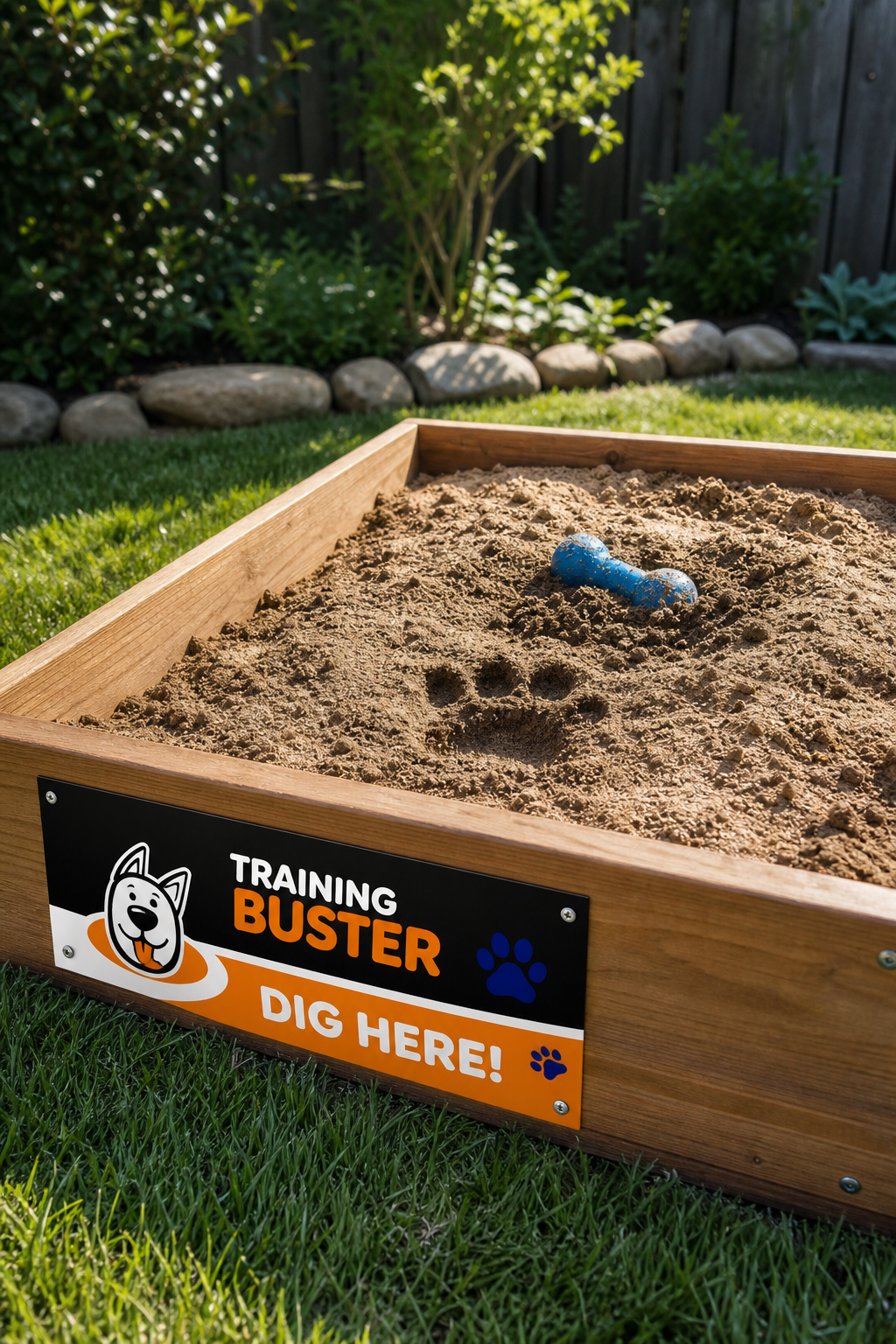
Build or buy a sandbox, old kiddie pools work great. Fill it with a mix of sand and soft dirt. Bury toys, bones, or treats in it so your dog discovers treasure there. Encourage them to dig in this spot by leading them to it and praising them when they do. If they start digging elsewhere, redirect them to the sandbox with a firm “no” and a treat when they comply.
Make sure the area is appealing: keep it shaded, add some of your dog’s favorite toys, and refresh the buried goodies regularly. Supervise at first, stand guard and correct them if they stray. Over time, they’ll learn that this is the only place where digging pays off.
Bottom line: A digging zone satisfies your dog’s natural instinct in a controlled spot, saving your garden while keeping your dog happy.
Step 4: Use Environmental Deterrents
If you need to protect specific areas like flower beds or vegetable patches, environmental deterrents can discourage digging without harming your dog. There are several methods, from homemade sprays to physical barriers. Here’s a comparison:
The poop deterrent is a standout: as demonstrated in a popular YouTube video, placing your dog’s own waste in the hole can stop digging instantly. Dogs dislike soiling their play area. You may need to repeat if they choose a new spot, but it’s free and often works. For a more permanent fix, install chicken wire or welded mesh just under the soil in the problem area. The Wirefence guide to stopping digging under fences shows how to lay mesh along fence lines to block escape attempts.
Another option is planting thorny shrubs like roses along vulnerable edges. Dogs hate the prickly sensation and will avoid those spots. Just be sure the plants are safe for dogs (avoid toxic varieties).
“The cheapest fix, poop in the hole, can be the most effective. Don’t underestimate the power of a gross surprise.”
If your dog has already caused damage to walls or fencing by digging near the foundation, you may need to repair those areas. on How to Repair Exterior Stucco Cracks for fixing any stucco damage caused by persistent digging.
Bottom line: Use a mix of deterrents, poop, sprays, or barriers, to make your dog’s favorite digging spots uncomfortable or unreachable.
Step 5: Train Your Dog to Stop Digging
Training is the backbone of stopping any unwanted behavior. For digging, you want to teach your dog that digging in the wrong places leads to nothing good, while ignoring the digging urge leads to rewards. Positive reinforcement is key. Never punish after the fact, your dog won’t connect the punishment to the digging hours earlier.
Start by supervising your dog when they are in the yard. Keep them on a long leash if needed. The moment they start digging in a forbidden area, interrupt with a firm “ah‑ah!” or a clap, then redirect them to an allowed activity like fetching a ball or going to their digging pit. When they follow the redirection, reward them with high‑value treats and praise. Consistency is critical.
Another technique is to teach an incompatible behavior. For example, teach your dog to “go to their mat” and stay there. When you see them start to dig, ask for the mat behavior and reward. Over time, the habit of digging is replaced with a better choice.
If your dog digs when you’re not home, set up a camera to observe. You may need to limit unsupervised access until the behavior is under control. For a deeper dive on using rewards effectively, on Positive Reinforcement Dog Training.
Bottom line: Train your dog to choose a different activity through rewards and redirection, making digging less rewarding than good behavior.
Step 6: Address Anxiety or Compulsive Digging
For some dogs, digging is a symptom of deeper issues like separation anxiety or obsessive‑compulsive disorder. If your dog digs frantically near doors or fences when left alone, or digs in a trance‑like state, anxiety may be the cause. According to VCA Hospitals, anxiety‑driven digging often occurs alongside other signs like pacing, whining, or destructive behavior.
Start by ruling out medical issues, see your vet. Then work on building your dog’s confidence and independence. Practice short departures and gradually increase the time you’re away. Provide a safe space like a crate or a quiet room with toys. Consider calming aids like pheromone diffusers or calming treats (check with your vet first).
If the behavior is severe, consult a professional dog behaviorist. They can create a tailored plan using desensitization and counter‑conditioning. For more guidance on when to seek help, read How to Stop Dog Barking, similar anxiety‑based behaviors respond to the same principles.
Bottom line: Anxiety‑based digging requires addressing the root fear, which may involve professional help and a gradual desensitization program.
Frequently Asked Questions
Why is my dog suddenly digging holes?
A sudden change in digging behavior could signal new triggers: a stray animal in the yard, increased boredom due to a change in routine, or even the onset of heat in unspayed females. It can also be a sign of anxiety if something in the environment changed (new pet, moving houses). Observe patterns and check for physical causes like parasites. If it persists, a vet check is wise.
Will neutering or spaying stop digging?
Neutering or spaying can reduce digging driven by hormones, for example, if your dog digs to escape and find a mate. But it won’t stop digging caused by boredom, instinct, or anxiety. It may help slightly, but training and management are still needed. The best time to spay/neuter is before sexual maturity, around 6 months, though benefits vary by breed.
How long does it take to stop a dog from digging?
It depends on the dog and the cause. The poop deterrent can work instantly for some. For behavior modification, expect a few weeks of consistent training. With a designated digging area, most dogs learn within a week where they can dig. If anxiety is involved, it may take months of gradual desensitization. Patience and consistency are key; quick fixes rarely last.
Is it cruel to let my dog dig?
Not at all, digging is a natural, enjoyable activity for many dogs. The cruelty would be to punish it without understanding the cause. Instead, give them an appropriate outlet like a sandbox. Suppressing a natural behavior can lead to frustration. The goal is to manage where and when they dig, not to eliminate it entirely.
What if my dog digs under the fence to escape?
This is a high‑priority issue, your dog could get lost or injured. First, ensure the fence extends below ground: bury chicken wire or a mesh apron along the bottom. You can also set footings or concrete blocks. Address the motivation: is your dog escaping to find a mate (spay/neuter) or because they’re anxious? Combine physical barriers with training and enrichment.
Can I use a shock collar to stop digging?
Shock collars are not recommended. They can cause fear, anxiety, and aggression. They don’t teach the dog what to do instead; they just punish the digging. Positive reinforcement, rewarding acceptable behavior, is more effective and humane. If you’re considering such tools, consult a professional trainer first for safer alternatives.
My dog only digs at night. Why?
Nighttime digging could be due to cooler soil temperatures, a comfortable spot to rest. It could also be triggered by nocturnal animals like raccoons or possums that your dog senses. Or it might be a habit formed because you’re not watching. Increase daytime exercise to tire them out, and restrict access to the yard at night until the habit breaks.
Will changing my dog’s diet stop digging?
No direct link, but nutrition affects energy levels. A high‑quality diet can help maintain stable energy, reducing excess hyperactivity that leads to digging. If your dog has a food allergy causing itchiness (which might prompt digging to scratch at the skin), switching food could help. Otherwise, focus on exercise and training.
Conclusion
Digging is one of the most frustrating behaviors a dog owner can face, but it’s also one of the most fixable. The key is understanding your dog’s personal reason, whether it’s boredom, instinct, cool earth, or anxiety, and then applying the right solution from this guide. Start with the basics: more exercise and mental stimulation. Then add a dedicated digging area if needed. Use deterrents to protect specific zones. Train with positive reinforcement so your dog learns better choices. And if anxiety is the root, don’t hesitate to seek professional support.
Remember, you don’t have to stop your dog from being a dog. You just need to channel that digging energy in a way that works for both of you. With patience and consistency, your yard can recover and your dog can keep that joyful spark, just in a sandbox instead of your flower bed. For more help on other behavior issues, explore our complete library of training guides at Training Buster.