
Hey there, new puppy parent! You’ve brought home a little ball of fluff, and you want to do everything right. One of the first big tasks is crate training. Think of the crate as your puppy’s den, a safe cozy spot they’ll love to retreat to. It’s not a punishment; it’s a bedroom. In the next few minutes, I’ll show you how to turn that simple box into a happy haven using treats, games, and a step-by-step plan that even the most whiny puppy can’t resist. We’ll cover choosing the right crate, making it a happy place, gradually increasing time, using it for potty training, handling whining, and advanced tips. Let’s get started.
Step 1: Choose the Right Crate Size and Type
Even seasoned trainers agree: the single biggest rookie error isn’t the crate itself, it’s buying a crate that’s too big for your puppy. A puppy with too much room can use one corner as a bathroom and the other for sleeping. That defeats the whole purpose of house training. So size matters a lot.
To get the right size, measure your puppy from the top of the head to the ground (height) and from the nose to the tail (length). Add about 3 to 4 inches to each measurement. The ideal crate lets your puppy stand up, turn around, and lie down comfortably, but not much more. If you have a puppy that will grow large, buy a crate with a divider panel. That way you can start with a small space and expand as your puppy grows.
Now, what about the type of crate?
Most people start with a wire crate because it’s easy to clean and adjust. But if you plan to fly with your dog, a plastic airline-approved crate is best. Wood crates look nice but can be a pain to clean. Fabric crates are fine for calm adult dogs, but puppies will chew through them.
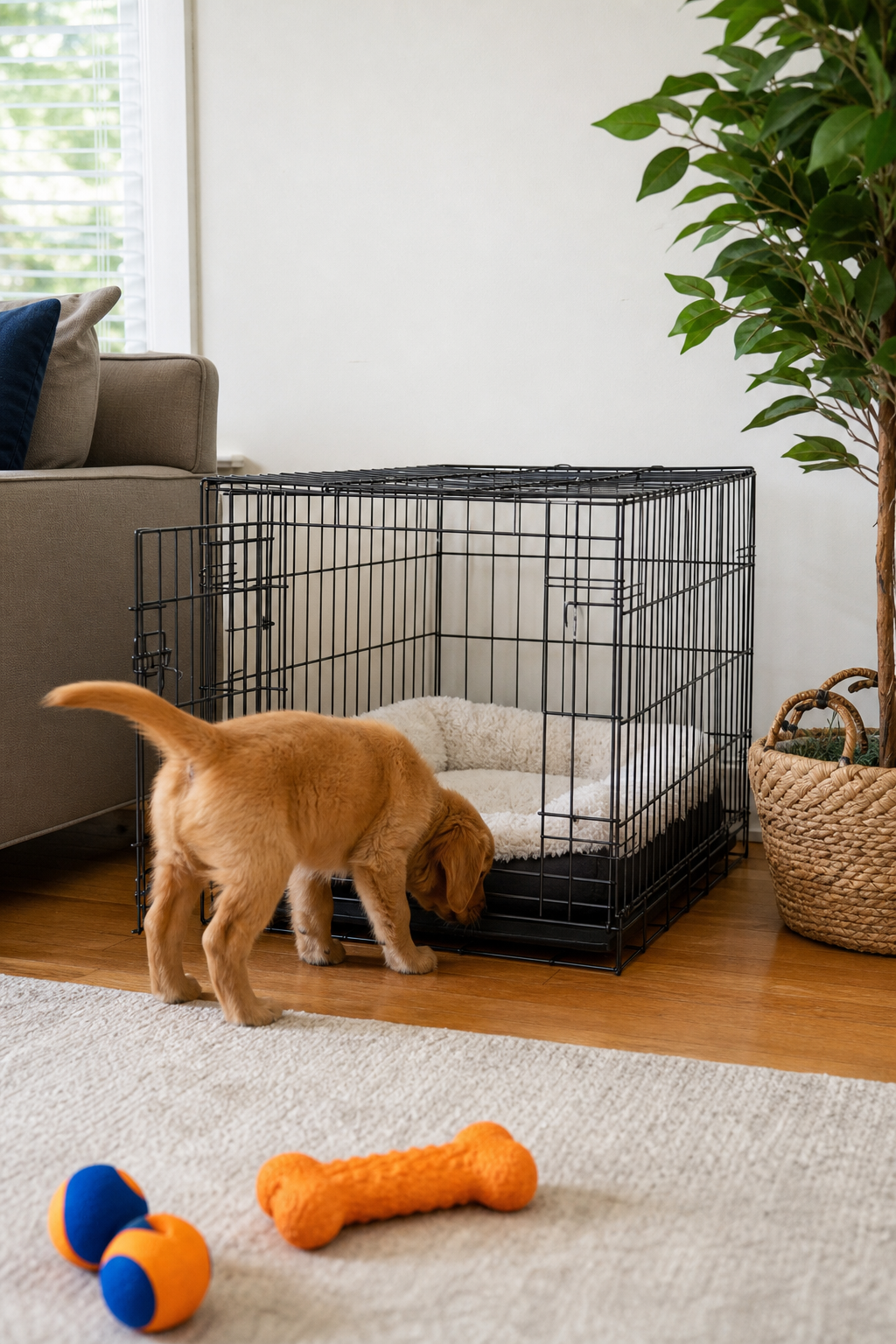
Bottom line: Choose a crate that fits your puppy’s current size (with a divider for growth) and matches your lifestyle based on material and portability.
Step 2: Make the Crate a Happy Place with Positive Reinforcement
Your puppy needs to love their crate. Think of it as their den , a safe place to relax. The best way to build that love is through positive reinforcement. Start by leaving the crate door open and tossing tasty treats inside. Use small, soft treats like bits of chicken or cheese. According to Wikipedia, dogs have a natural denning instinct, so tapping into that makes training easier.
One of the most effective tools is a stuffed Kong. Fill a Kong with something your dog loves , like meat pate, peanut butter, or yogurt , then freeze it. Give it to your puppy only when they are inside the crate. This creates a powerful positive association. The frozen treat lasts for hours and keeps them busy. As one YouTube trainer put it, “The only time your dog ever gets access to their frozen meatical is when they’re inside their crate.”
You can also play crate games. Toss a treat into the crate and say “crate” or “bed.” Praise when they go in. Once they are comfortable, close the door for a few seconds and immediately open it. Gradually increase the door-closed time. Always reward calm behavior in the crate. Never use the crate as punishment; that ruins the positive vibe.
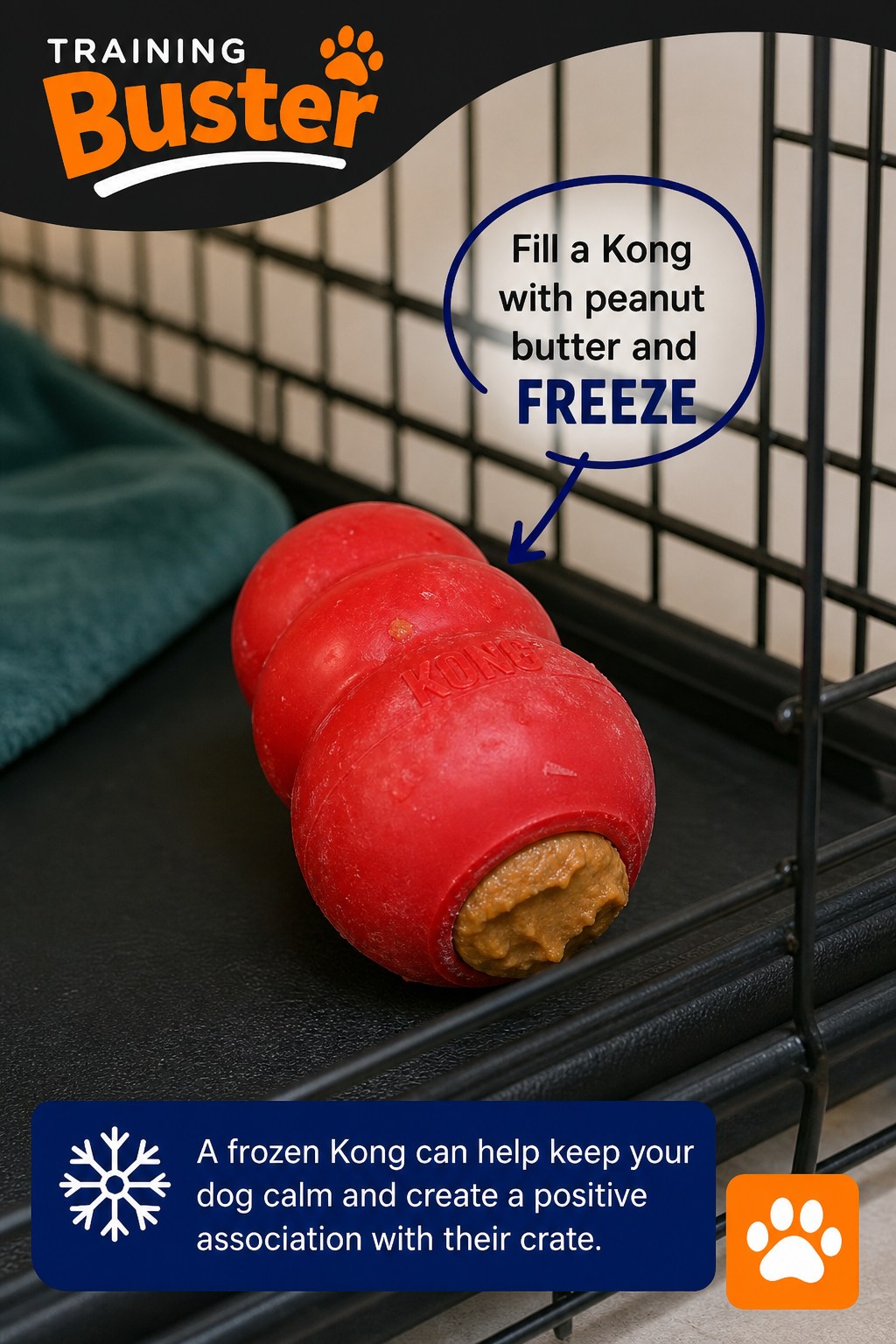
Bottom line: Use food-stuffed toys and treats to build a strong positive emotional connection to the crate from day one.
Step 3: Gradually Increase Crate Time and Distance
Once your puppy goes into the crate happily, it’s time to extend the time they spend inside. Start with very short sessions , just a few minutes while you stay nearby. Then gradually increase to longer periods. The key is to go slowly. If you rush, you might create anxiety.
Use the airdrop reward technique: while your puppy is relaxed inside, periodically toss a treat into the crate. This rewards staying calm. Then start moving away for a few seconds, then return and reward. Slowly increase the distance. For example, walk to the other side of the room, then come back. If your puppy stays calm, great. If they start to whine, you may have gone too fast. Back up a step.
Another tip from professional trainers is to use a calm verbal cue like “settle” or “easy” when your puppy lies down quietly. Over time, they will learn that quiet behavior gets rewards. You can also use a dog camera to monitor when you leave the room. That way you can return before anxiety peaks.
“The best time to start building crate confidence is right after exercise and a potty break.”
Bottom line: Increase crate duration and separation distance slowly, always rewarding calmness, and never rushing past your puppy’s comfort level.
Step 4: Use the Crate for Potty Training and Housebreaking
Crate training and potty training go hand in hand. Dogs naturally avoid soiling their sleeping area. So a properly sized crate is a powerful tool for teaching bladder control. But you must pair it with a strict potty schedule.
Take your puppy to the same potty spot each time and use a cue like “go potty.” Reward immediately after they eliminate. Only after that should they get freedom. Never expect a puppy under 6 months to hold it all night without a break. Set an alarm for night time potty breaks.
Avoid using pee pads inside the crate. They encourage your puppy to think it’s okay to potty inside. Instead, keep the crate clean and cozy. Use an enzymatic cleaner to remove any accident smells. If your puppy has accidents in the crate, the space may be too big or you need shorter intervals.
Bottom line: Use the crate as a management tool in a consistent potty routine , take puppy out frequently, reward outside potties, and never leave them longer than they can hold it.
Step 5: Handle Whining and Crying Without Rewarding It
Almost every new puppy will whine or cry in the crate at first. The important thing is not to reinforce the behavior. If you rush to let them out every time they whine, you teach them that whining works. Instead, use a calm approach.
First, make sure your puppy doesn’t need to potty, is not hungry, and is not uncomfortable. If all needs are met, then ignore the whining. But “ignore” can be tough. Some trainers recommend a firm “shush” or a light tap on the crate to interrupt the whining (not to startle, just to break the pattern). Then reward even a few seconds of quiet.
Another technique is to wait for a pause in the whining, then immediately reward with a treat. This teaches that quiet gets rewards. It may take several repetitions, but your puppy will learn. Consistency is key. Never let them out while they are whining. Wait for a quiet moment, then open the door.
Bottom line: Ignore whining when needs are met, reward quiet moments, and never let your puppy out of the crate while they are crying.
Step 6: Advanced Crate Training , Travel, Clicker, and Older Dogs
Once your puppy is comfortable in the crate at home, you can expand to other situations. Crate training is extremely useful for travel , both in the car and for flying. If you plan to travel with your dog, get them used to the crate moving. Start by placing the crate in the car while it’s parked, then take short drives around the block. Gradually increase the length of the car rides.
Clicker training can speed up crate training significantly. Charge the clicker by clicking and treating. Then click and treat when the puppy enters the crate. You can click for any calm behavior inside. The clicker marks the exact behavior you want to reward.
For older or adopted dogs, the same principles apply, but you may need to go even slower. If an adult dog has had a negative crate experience, start with the door open and lots of treats. Never force them inside. Let them explore at their own pace. Use high-value food like cheese or hot dogs to build a new positive association.
“Crate training isn’t just for puppies. Older dogs can learn to love their crate too, with patience and positive associations.”
Bottom line: Extend crate training to travel and new environments, and use clicker or extra patience for adult dogs to establish the crate as a safe space.
Frequently Asked Questions
How long does it take to crate train a puppy?
The full habit-forming process can take up to six months for a puppy to be fully reliable in the crate. But initial steps like going in happily can take a few days to a few weeks. Consistency and patience are the biggest factors. Each puppy is different.
Should I cover the crate with a blanket?
Covering the crate can help some puppies feel more secure by blocking light and noise. But some puppies may become anxious if they can’t see. Try covering three sides and leaving the front open. Watch your puppy’s reaction. If they seem calmer, keep the cover; if not, remove it.
What if my puppy poops in the crate?
First, check that the crate is not too big. If it’s properly sized and your puppy still poops, you may be leaving them too long. Take a step back and shorten crate time. Also, ensure you are using an enzymatic cleaner to remove the smell. If accidents continue, consider a vet check to rule out medical issues.
Can I put a bed in the crate?
Yes, but only if your puppy is not a chewer who will shred it. For young puppies, a thin washable mat or a towel is safer. Avoid thick fluffy beds until your puppy is past the chewing phase. Always remove collars and tags for safety when in the crate.
How often should I let my puppy out of the crate?
Puppies under 4 months need potty breaks every 2-3 hours during the day, and at least once at night. As they grow, the interval increases. Never leave a puppy in a crate for more hours than their age in months (plus one). For example, a 3-month-old can hold it about 4 hours max.
Is it okay to use the crate for timeouts?
No, the crate should never be used for punishment. It should always be a positive space. If you use it as a timeout, your puppy will start to fear the crate and training becomes much harder. Instead, use a separate quiet area for timeouts if needed.
What if my dog is scared of the crate?
Go back to basics. Leave the door open, toss treats near it, then inside. Feed meals near the crate. Play crate games. Never force them in. It may take longer, but with patience and positive reinforcement, most dogs will overcome their fear. For extreme cases, consult a professional trainer.
Can I leave my dog in a crate while I’m at work?
Only if you can come home during lunch to let them out. No dog should be crated for 8+ hours straight. If you work full time, consider a dog walker, daycare, or a puppy pen attached to the crate with access to a potty area. Crate time should be broken up.
For more detailed guides, check out our How to Housetrain a Puppy: Step-by-Step Guide and Positive Reinforcement Dog Training: Benefits and Techniques.
Conclusion
Crate training your puppy doesn’t have to be a battle. Remember the golden rules: size matters, make it a happy place, go slow, use the crate for potty training, handle whining calmly, and be patient. Even when it feels like your puppy will never love their crate, stick with it. Consistent positive reinforcement will pay off.
The crate is not just a tool for you; it’s a sanctuary for your puppy. A place where they can relax, sleep, and feel safe. Whether you’re using it to prevent accidents, manage behavior, or prepare for travel, the time you invest in training now will lead to years of peaceful cohabitation.
If you hit a snag, revisit each step. Maybe you need a smaller crate, or more exercise before crating. Every puppy is an individual. Trust the process and keep it positive. You’ve got this.
For further reading on addressing specific crate issues, How to Stop a Yorkie from Barking in a Crate.