
Dogs need more than a walk and a bowl of food. Without enough mental work, they can get bored, nervous, or act out. This guide shows you proven ways to give your dog the mental stimulation for dogs it craves, using toys, games, scent work, tricks, and even music. You’ll walk away with step‑by‑step ideas you can try today.
Puzzle Toys & Interactive Feeders
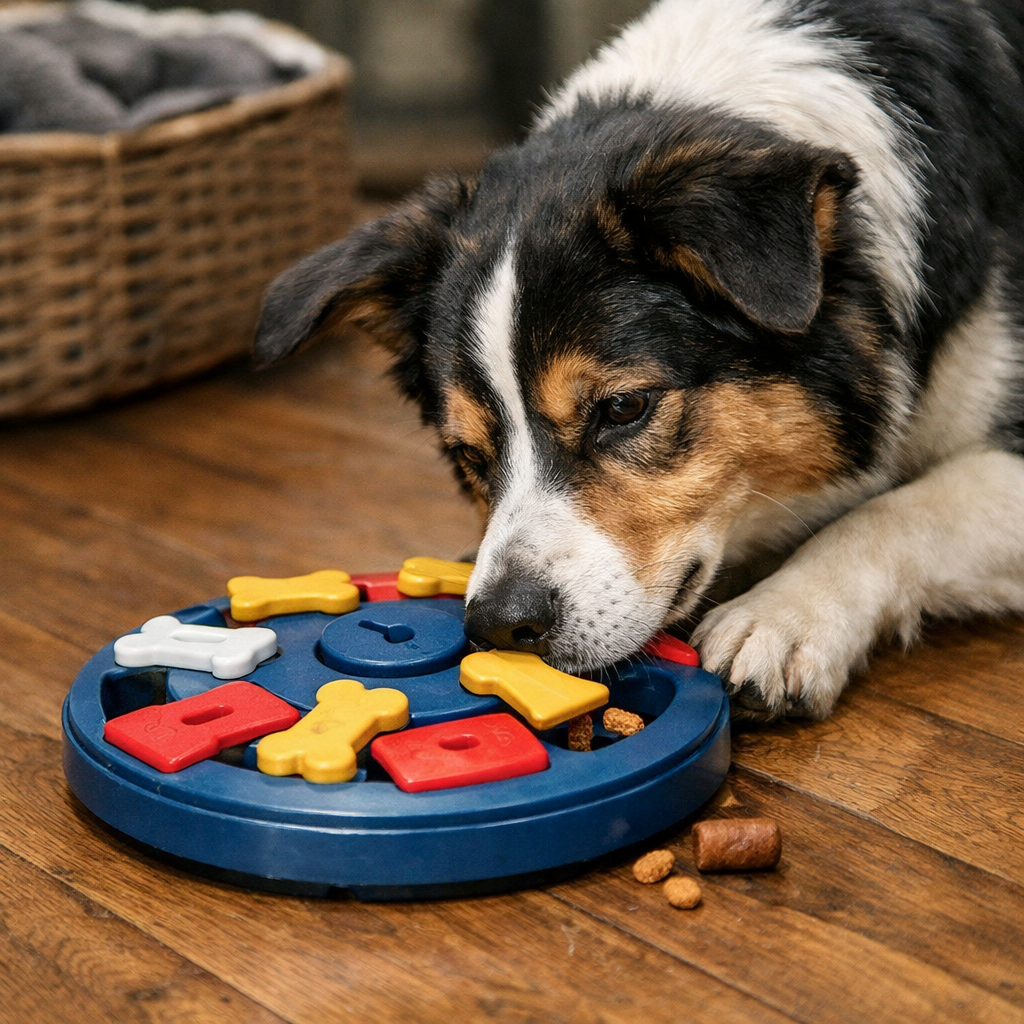
First up are puzzle toys and feeders. These tools turn a simple snack into a brain workout. When a dog has to roll, slide, or paw at a toy to get a treat, it uses the same problem‑solving skills it would need in the wild.
One of the most popular brands is Nina Ottosson by Outward Hound. Their toys come in four levels, so you can start easy and add challenges as your dog improves. A beginner level might have a single compartment that opens with a light push. A hard level could have multiple sliding trays that must line up just right. Because the difficulty is adjustable, the same toy can grow with your dog.
Another classic is the Kong. You can fill it with kibble, peanut butter, or frozen broth. The rubber material forces the dog to chew, twist, and bite to get the food out. This not only works the mind but also satisfies a strong chew drive.
Interactive feeders work the same way. They slow down fast eaters, keep the dog occupied, and mimic the hunt‑and‑gather instinct. VCA Hospitals interactive feeder guide explains how these devices let pets work for a portion of their meal, which can lower the risk of bloating and improve focus.
When you shop for a puzzle toy, look for a few key features: durable material, easy to clean, and a clear difficulty rating. If a toy feels flimsy, it may break and become a choking hazard.
We love the flexibility of these toys because you can use them at home or take them on a trip. A portable feeder fits in a backpack, so you can keep your dog busy on long car rides.
For more on why a bored dog might act out, check out Why is Your Dog Hyper or Dominating?, it explains how mental work helps calm excess energy.
Bottom line:Puzzle toys and interactive feeders turn snack time into a focused brain workout.
DIY Brain Games & Enrichment Activities
If you prefer to make your own games, DIY enrichment is a great low‑cost path to mental stimulation for dogs. All you need are everyday items and a bit of creativity.
Start with a simple treat‑hunt. Scatter a few treats on the floor where the dog can see them. Let the dog sniff them out. As they get better, hide treats under a towel, inside a folded shirt, or behind a chair. The key is to make the search a little harder each round.
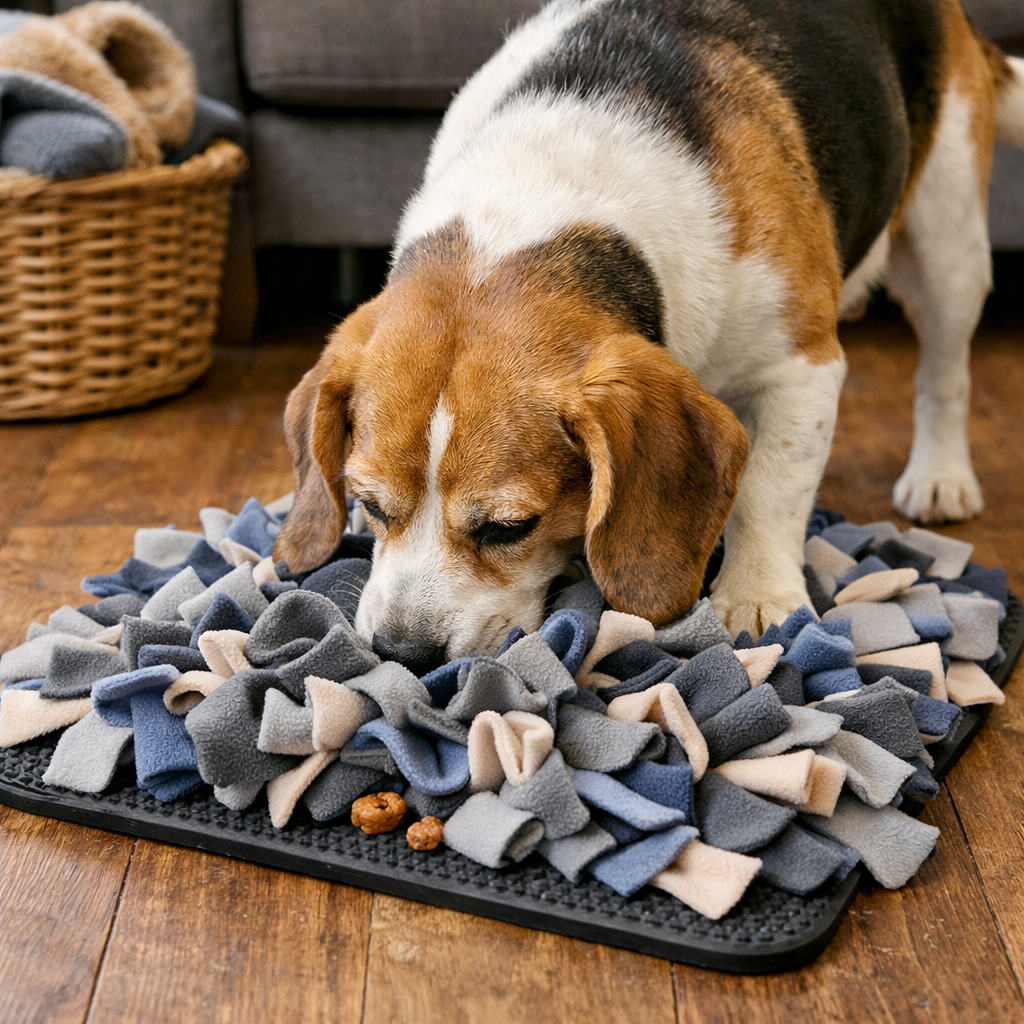
Another easy game uses a rubber mat and strips of fleece. Cut the fleece into five‑centimeter wide strips, tie them onto the mat with a double knot, and then sprinkle treats over the top. The dog has to use its nose and paws to move the fabric and find the hidden bites.
You can also turn a plastic bottle into a rolling treat dispenser. Fill the bottle with kibble, screw the cap on, and drill a few large holes. The dog must roll the bottle to let the pieces fall out. Start with big holes, then shrink them as the dog learns the game.
For a cool indoor version, use a muffin pan and tennis balls. Place a treat in each cup, then cover each cup with a ball. The dog must lift the balls to reach the treats. This game works well for small dogs, and you can substitute an egg carton for a tiny pup.
When you design a DIY game, think about safety. Remove any sharp edges, avoid small parts that could be swallowed, and supervise the first few attempts.
Our own testing shows that a 10‑minute scent hunt can leave a dog calmer than an hour of fetch. That’s why many shelters use these simple games to keep dogs happy while they wait for a home.
Looking for more ideas? Best Toys For a Cavapoo Puppy shares a few toy‑based puzzles that you can easily replicate with household items.
Bottom line:DIY games give mental stimulation for dogs without spending a lot of money.
Scent Work & Nose Games
Dogs live in a world of smells. A strong nose is one of their biggest gifts, and scent work taps right into that gift. When you teach a dog to find a hidden scent, you give it a job that feels natural and rewarding.
Start with a simple cup game. Place a treat under one of three plastic cups, shuffle them, and let the dog point to the right cup with its nose or paw. As the dog improves, increase the number of cups or hide the treat in a different room.
Another easy game uses a muffin tin. Fill each cup of the tin with a treat, then cover some of them with tennis balls. The dog must lift the balls to get the treats. This game mixes scent, sight, and problem solving.
For a more advanced scent, you can use essential oils like birch, which is the target scent for AKC Nose Work competitions. Dilute a few drops on a cotton swab, hide the swab in a box, and let the dog locate it. AKC indoor scent games guide offers step‑by‑step tips for beginners.
When you set up a scent session, keep these pointers in mind:
- Use high‑value treats that your dog loves.
- Start in a quiet room with few distractions.
- Reward the dog each time it finds the scent, even if the find is slow.
Scent work is especially good for older dogs or dogs with limited mobility. They can sit or lie down while they hunt, so the activity is low‑impact but still mentally tiring.
Many shelters use nose work to calm anxious dogs. The focus on sniffing can lower cortisol, the stress hormone, and boost confidence.
“The best time to start building a dog’s confidence was yesterday, through scent work.”
Bottom line:Nose games give mental stimulation for dogs while keeping activity gentle.
Training Tricks & Cognitive Challenges
Training isn’t just about sit and stay. Advanced tricks push a dog’s mind to think, plan, and remember. When you teach a new behavior, you are giving the dog a mental puzzle to solve.
Start with eye contact. Hold a treat near your face and ask the dog to look at you. When the dog watches, say a cue like “watch me” and reward. Over time, fade the treat and keep the cue. This simple skill builds focus and releases oxytocin, a bonding hormone.
Next, try a “hand‑target” trick. Teach the dog to tap your palm with its nose on cue. This can become a foundation for more complex tasks like opening a door or pulling a rope.
For a real brain‑booster, teach the dog to put toys away. Set up a small basket, show the dog how to drop a toy into it, and reward each successful drop. Over weeks, the dog learns to clean up its play area.
Agility drills also count as cognitive challenges. Build a mini obstacle course with chairs, broomsticks, and cushions. Guide the dog through the weave, jump, and tunnel using clear cues. The dog must remember the order of obstacles, which sharpens memory.
Positive reinforcement is the secret sauce. Use treats, praise, and play as rewards. Keep sessions short, 5 to 10 minutes, so the dog stays engaged and doesn’t get frustrated.
Advanced training also helps with impulse control. Teach “leave it” by holding a treat in a closed hand. When the dog looks away, say “yes” and give a different treat. Repeat until the dog waits calmly.
Bottom line:Clever tricks and challenges keep a dog’s brain sharp and boost confidence.
Music & Calming Stimuli
Sound can change a dog’s mood just like it can for people. Soft, slow‑tempo music can lower heart rate and reduce anxiety. A study found that classical music made shelter dogs bark less and rest more. peer‑reviewed study on music therapy for dogs supports this.
When you pick music, aim for a tempo of 50‑60 beats per minute. This pace matches a calm heartbeat. You can find playlists on streaming services that label tracks as “dog calm music” or “relaxing classical for pets.”
Play the music during stressful times: vet visits, fireworks, or when you leave the house. Keep the volume low, just loud enough for the dog to hear without startling.
Aside from music, you can use natural sounds like rain or gentle ocean waves. These sounds mask sudden noises that might trigger fear.
Another simple tool is your own voice. Speaking in a soft, steady tone can reassure a nervous dog. Combine a calming voice with a slow song for extra effect.
Remember that every dog is unique. Some may prefer silence, so watch their body language and adjust as needed.
Bottom line:Music and gentle sounds offer a soothing mental break for dogs.
For a deeper look at how play can calm a hyper pup, see How to Properly Play Tug of War with Your Dog. The article explains how structured play adds mental focus.
Frequently Asked Questions
What is the best daily amount of mental stimulation for dogs?
A good rule is at least 20‑30 minutes of focused mental work each day. This can be split into short puzzles, scent games, or training drills. Consistency matters more than length; a few minutes of intense focus beats a long, bored session.
Can I use the same puzzle toy for multiple dogs?
Yes, but clean the toy between uses to avoid sharing germs. Also, adjust the difficulty for each dog’s skill level. A senior dog may need a simpler version, while a young, active breed can handle a tougher puzzle.
Do DIY games cost more than store‑bought toys?
Usually not. Many DIY games use items you already have, like cardboard boxes or plastic bottles. The only cost is treats, which you likely already buy for regular feeding.
How do I know if my dog is bored?
Bored dogs often chew furniture, dig holes, or bark excessively. If you notice these signs, add a new brain game or scent activity to the routine. A bored pup will quickly lose interest in the same old toy.
Is music safe for all dogs?
Music is safe for most dogs, but watch for signs of stress such as panting or pacing. If a dog seems uneasy, lower the volume or try a different genre. Some dogs prefer silence, and that’s okay too.
Can mental stimulation replace physical exercise?
No. Both are needed. Mental work tires the brain, while walks and play keep the body healthy. Aim for a balanced mix each day.
How often should I rotate toys or games?
Rotate every 3‑5 days. Fresh puzzles keep curiosity high and prevent the dog from learning a shortcut that makes the game too easy.
What if my dog refuses a new puzzle?
Start with a very easy version and reward any interaction. Gradually increase difficulty as the dog gains confidence. Patience and positive reinforcement are key.
Conclusion
Keeping a dog’s mind active is just as vital as feeding, walking, and vet visits. Puzzle toys, DIY games, scent work, clever tricks, and calming music each give mental stimulation for dogs in a different way. Mix and match these ideas to fit your dog’s breed, age, and personality. The more variety you add, the less likely boredom will turn into destructive habits.
Want more in‑depth guides? on hyper behavior for extra tips on channeling energy. With the right tools and a bit of creativity, you’ll see a calmer, happier companion who loves learning new things.