
Does your dog’s barking drive you crazy? You’re not alone. Barking is how dogs talk. But when it’s nonstop, it’s a problem. The good news? You can fix it. This guide will walk you through simple, step-by-step methods to stop excessive barking. You’ll learn why your dog barks, how to manage the environment, train the “quiet” command, and more. Let’s get started.
Step 1: Identify Why Your Dog Barks

Before you can stop the barking, you need to know why it’s happening. Dogs bark for different reasons. Each reason needs a different fix. Let’s look at the main ones.
Territorial or alert barking. Your dog barks at people or animals passing by. They’re saying, “Hey, this is my space!” This happens a lot at windows or fence lines.
Excitement barking. The doorbell rings. You grab the leash. Your dog goes wild. This is happy barking. It’s still annoying, but it’s not fear.
Attention-seeking barking. Your dog barks at you to get your attention. Maybe they want food, play, or just a pet. If you give in, they learn barking works.
Boredom barking. A bored dog barks. They need mental stimulation and exercise. Without it, barking becomes a hobby.
Separation anxiety barking. This happens when you leave. Your dog is distressed. They may bark, howl, or whine. It’s not misbehavior. It’s panic.
Fear-based barking. Loud noises, strangers, or new situations can scare a dog. They bark to make the scary thing go away.
How can you tell which one it is? Watch your dog. When do they bark? At the mailman? When you pick up the keys? When they’re alone? Keep a diary. Note the time, place, and trigger. After a few days, you’ll see a pattern.
Once you know the cause, you can choose the right solution. For example, boredom needs more exercise. Fear needs desensitization. Separation anxiety needs a plan for being alone.
Remember, barking is communication. Your dog isn’t trying to be bad. They’re telling you something. Listen first. Then act.
Bottom line: Identifying the root cause of your dog’s barking is the first and most important step toward a lasting solution.
Step 2: Use Management Techniques
While you’re working on training, you can make changes to your dog’s environment. This reduces the chances of barking in the first place. Management doesn’t fix the problem forever. But it buys you time.
Block the view. If your dog barks at things outside, cover windows. Use blinds, curtains, or removable window film. You can also use privacy film that lets light in but blocks the view. For doors, install a solid door or use a baby gate to keep the dog away.
Mask the noise. Use a white noise machine, fan, or calming music. This helps dogs that bark at sounds like trucks or neighbors. Classical music works well. Studies show it calms dogs.
Control the space. If your dog barks at the front door, keep them in a different room. Use baby gates or an exercise pen. This removes the trigger.
Provide mental stimulation. A tired dog is a quiet dog. Give your dog puzzle toys, snuffle mats, or frozen Kongs. These keep them busy and mentally challenged. Rotate toys to keep them interesting.
Manage the greeting routine. When you come home, ignore your dog for a few minutes. No eye contact, no talking. Wait until they’re calm. Then give attention. This stops excitement barking at the door.
Management tools like these are temporary. They help while you train new behaviors. on excessive barking, managing the environment is especially helpful for dogs that bark habitually in specific locations.
Remember, management alone won’t stop barking. But it stops the habit from getting worse. Combine it with training for best results.
Bottom line: Management techniques like blocking views and masking noise can reduce barking triggers while you work on long-term training.
Step 3: Train the ‘Quiet’ Command
Teaching your dog to be quiet on cue is a game-changer. The “quiet” command gives you control. Here’s how to teach it step by step.
What You Need
Small, high-value treats (cut into tiny pieces). A calm environment. Patience. A clicker is optional but helpful.
The Method
First, get your dog to bark. You can knock on a door, ring a bell, or make a noise they react to. Wait for them to bark a few times. Then, in a calm voice, say “Quiet.” As soon as they stop barking (even for a second), click (or say “Yes”) and give a treat. Repeat. Gradually wait for longer periods of quiet before treating.
If your dog won’t stop barking at first, use management. For example, have someone ring the doorbell. Before your dog starts barking, say “Quiet” and show a treat. When they pause to look at the treat, mark and reward. Over time, they’ll learn that “Quiet” means “Stop barking and get a reward.”
Practice in short sessions. Five minutes, twice a day. That’s it. According to research, effective bark control relies on very short, frequent sessions , an average of 30 seconds per training burst. Consistency is key.
Once your dog understands “Quiet” in a controlled setting, practice in real-life situations. Start with low-level triggers (like a quiet knock) and work up to harder ones (like the doorbell). Always reward silence.
A common mistake: saying “Quiet” over and over while your dog keeps barking. That teaches them to ignore you. Say it once, then wait for silence. If you need to, use a treat to lure the pause.
You can also teach your dog to “speak” on cue. This helps them understand the difference between barking and silence. For instructions, on how to teach your Springer Spaniel to bark less, the same principle applies to any breed.
Bottom line: Training the “quiet” command with positive reinforcement gives you a reliable way to stop barking on the spot.
Step 4: Desensitization and Counter-Conditioning
Some dogs bark because they’re scared or anxious. For them, you need to change how they feel about the trigger. That’s where desensitization and counter-conditioning come in. Big words, but simple ideas.
Desensitization means exposing your dog to the trigger at a low level , so low they don’t react. Over time, you increase the intensity. You teach them that the trigger is no big deal.
Counter-conditioning means pairing the trigger with something awesome, like treats. The goal is to change their emotional response from fear to happiness.
How to do it
Say your dog barks at the vacuum cleaner. Step one: put the vacuum in the room but don’t turn it on. Give your dog treats for calm behavior. Do this for a few days. Step two: move the vacuum slightly or turn it on in another room. Still give treats. Step three: gradually bring the vacuum closer and turn it on, always rewarding calmness.
The key is to work at your dog’s pace. If they show signs of stress (whining, lip licking, panting), you’re going too fast. Back up a step.
This method works for many triggers: other dogs, strangers, noises, even car rides. For a real-world example, a behavior session with two terriers showed that delivering a positive reinforcerbeforethe trigger (like a knock) stopped the barking entirely. The dogs learned that the knock predicted treats, not trouble.
| Trigger | Desensitization Step | Counter-Conditioning Step |
|---|---|---|
| Doorbell | Play doorbell sound at low volume | Feed treats each time doorbell sounds |
| Passing dogs | Watch from a distance where dog is calm | Treat every time another dog appears |
| Thunder | Use a recording at very low volume | Pair with a high-value chew or play |
Desensitization takes time. Weeks or months. But it’s one of the most effective ways to stop fear-based barking. For more on this technique, on positive reinforcement dog training.
Bottom line: Desensitization and counter-conditioning change your dog’s emotional response to triggers, reducing anxiety-driven barking over time.
Step 5: When to Seek Professional Help
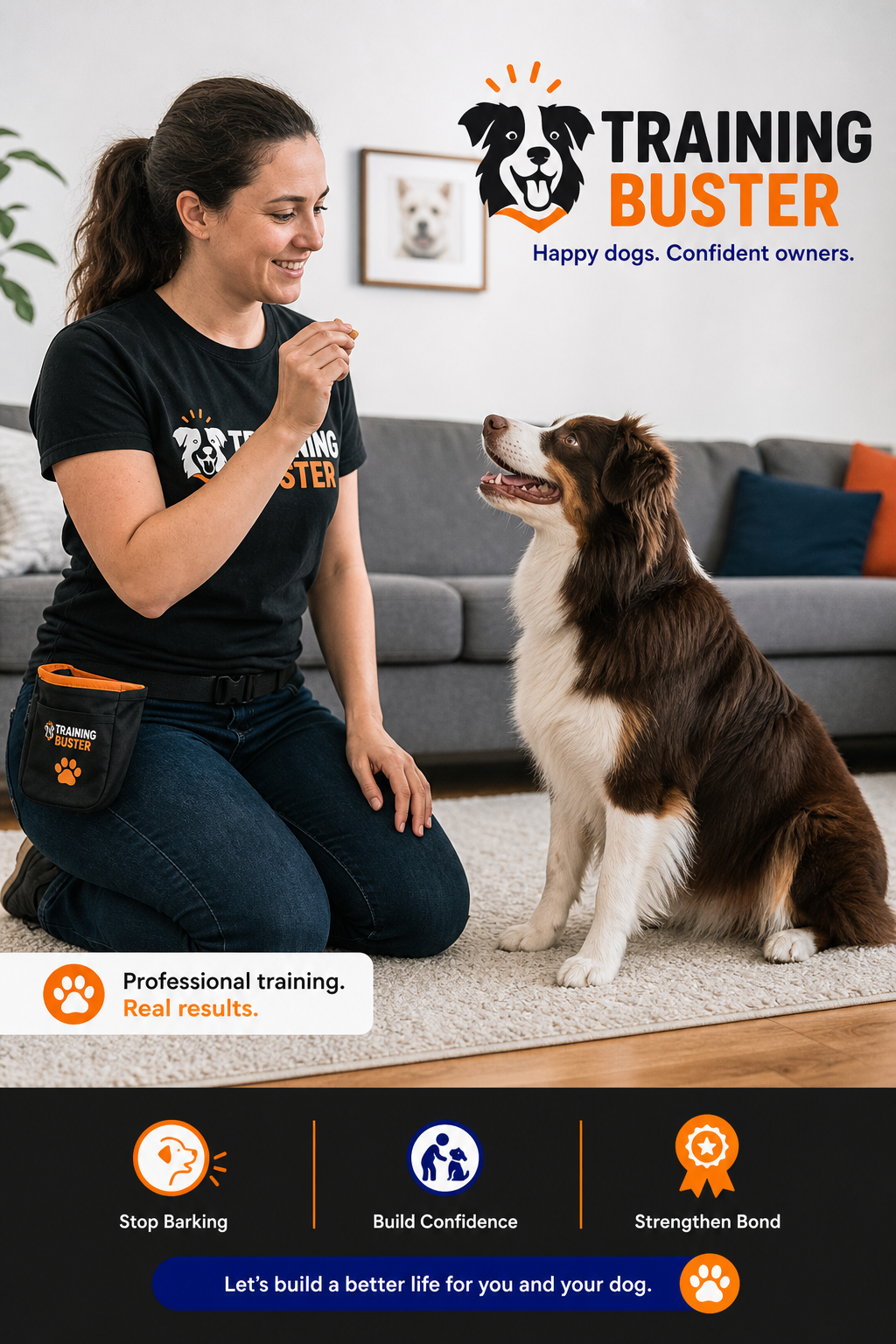
Sometimes, despite your best efforts, the barking doesn’t stop. Or it gets worse. That’s when you need a professional. Here are signs it’s time.
- Aggression. If your dog growls, lunges, or bites, get help immediately. This is dangerous and requires expert handling.
- Severe separation anxiety. If your dog destroys things, drools excessively, or hurts themselves when left alone, a trainer or behaviorist can create a plan.
- Barking that doesn’t respond to training. If you’ve tried management and the “quiet” command for weeks with no improvement, a pro can spot what you’re missing.
- Your dog is stressed. If the barking comes with signs of distress (pacing, trembling, hiding), it’s time to call someone who can assess the emotional state.
- You’re frustrated and losing patience. Dogs pick up on your feelings. If you’re angry, the situation can get worse. A trainer can give you a fresh perspective.
Where to find help? Look for a certified dog trainer or behaviorist. Ask your vet for recommendations. Many trainers offer online consultations, which can be affordable and convenient.
Professional trainers use the same positive-reinforcement techniques described here. They can also help with more complex issues like fear aggression or multi-dog households. According to Eli Dog Trainer’s list of signs your dog needs professional training, excessive barking that disrupts your life is a key indicator.
Don’t feel like a failure for asking for help. Even the best dog owners need a second pair of eyes. Professional training can transform your relationship with your dog.
Bottom line: Knowing when to seek professional help is a sign of responsible ownership and can prevent minor barking issues from becoming serious behavior problems.
Frequently Asked Questions
How long does it take to stop dog barking?
It depends on the cause and consistency. Simple attention barking might improve in a week. Deep-seated fear or separation anxiety can take months. Most dogs show improvement within two weeks of daily training. The key is short, frequent sessions , 5 minutes twice a day.
Will a bark collar stop my dog from barking?
Bark collars (citronella, vibration, or static) may stop barking temporarily, but they don’t address the underlying cause. They can also cause fear or anxiety, making the problem worse. Positive reinforcement training is safer and more effective long term. Use collars only under professional guidance.
How can I stop my dog from barking at the door?
Train an alternative behavior. Teach your dog to go to a mat or bed when the doorbell rings. Practice with friends. First, ring the bell, then cue your dog to go to bed and reward. Over time, they’ll automatically run to bed instead of barking. Management (blocking view) helps too.
Is it okay to yell at my dog to stop barking?
No. Yelling adds to the chaos and can make your dog more anxious or excited. Your dog may think you’re joining in. Instead, stay calm, use the “quiet” command, and reward silence. If you’re frustrated, walk away and try later.
Why does my dog only bark when I leave?
That’s separation anxiety. Your dog is distressed. Training involves gradual departures, making absences short and positive. Provide a distraction like a stuffed Kong or calming music. For severe cases, consult a behaviorist. Never punish a dog for anxiety-related barking.
Can I train an older dog to stop barking?
Absolutely! Old dogs can learn new tricks. The same methods work at any age. Older dogs may be less energetic, making training easier. Just be patient , they might have years of practice barking. Consistency is crucial.
What should I do if my dog barks at other dogs on walks?
Keep distance from other dogs. Practice the “look at me” command at home. On walks, when you see another dog, reward your dog for looking at you instead of barking. Gradually decrease distance. Use high-value treats. Desensitization works well for leash reactivity.
Should I use a muzzle to stop barking?
No. Muzzles are for safety, not barking. A dog can still bark with most muzzles. And a muzzle doesn’t address the reason for barking. It’s also unfair to your dog. Always use positive training methods.
Conclusion
Stopping excessive barking is possible. It starts with understanding your dog. Identify the trigger. Use management to reduce it. Train the “quiet” command with positive rewards. Desensitize your dog to scary things. And know when to get help.
Remember, barking is natural. Your goal isn’t a silent dog. It’s a dog who barks at the right things and stops when asked. Be patient. Be consistent. Celebrate small wins.
Need a step-by-step plan? Our friends at TrainingBuster.com offer complete guides that cover all these techniques in one place. From bark control to basic obedience, they have everything a dog owner needs.
You’ve got this. Your dog is counting on you. Start today. Pick one technique and practice it this week. You’ll be amazed at the progress.