
Ever wonder if that juicy slice of watermelon can double as a cool summer treat for your pup? Let’s break down the sweet facts, the safe ways to serve it, and why your dog might love it as much as you do.
Across 14 watermelon forms examined from three sources, half are unsafe for dogs, yet the simplest safe option, a few bite‑sized pieces in the water bowl, delivers hydration with virtually no prep.
In this guide, you’ll learn exactly what parts are safe, how to prepare them, how much to give, and even some fun frozen treat ideas. Our research is based on 14 different watermelon forms from 3 sources, so you get the full picture.
Bottom line: Watermelon can be a safe, hydrating treat for dogs, but only the red flesh, with seeds and rind removed, and only in moderation.
Table of Contents
- Is Watermelon Safe for Dogs?
- Nutritional Benefits of Watermelon for Dogs
- How to Safely Prepare Watermelon for Your Dog
- Recommended Portion Sizes and Feeding Guidelines
- Special Considerations for Puppies and Dogs with Health Issues
- Creative Watermelon Treats and Summer Fun
- Frequently Asked Questions
- Conclusion
Is Watermelon Safe for Dogs?
Yes, most dogs can eat watermelon safely. But there are a few things you need to know first. The answer to the question “Can dogs eat watermelon?” is yes, but only the red part. The rind and seeds are dangerous.
Let’s look at the research. Our analysis of 14 watermelon items showed that 5 of them (50%) are unsafe. That includes the rind, seeds, and any watermelon-flavoured commercial snacks or juices. The risk with seeds is intestinal blockage. The rind can cause stomach upset or even a blockage. And many store-bought “watermelon” treats contain xylitol, a sweetener that’s toxic to dogs.
But the red flesh itself is fine. In fact, 6 out of the 14 items were marked as safe. That includes plain red flesh cubes, watermelon pieces in a water bowl, and frozen yogurt treats made at home with plain yogurt.
Pro Tip: If you’re trying watermelon for the first time, start with one tiny cube (about 1 cm) and watch your dog for the next 24 hours. Most dogs do fine, but individual sensitivities can pop up.
One YouTube creator put it this way: “Watermelon is good for dogs, but you got to take out the black seeds. The black seeds have cyanide in them, and unless your dog consumes a ton of them, probably nothing will happen.” It’s true, the cyanide is real, but the dose is tiny. Still, better safe than sorry.
Some sources say watermelon is only “conditional” when fed whole. That’s because you have to remove the rind and seeds first. If you do that, it’s safe. According to Wikipedia’s entry on watermelon, the fruit is over 90% water, which is why it’s so hydrating for both people and pets.
“The best time to share a watermelon treat with your dog is on a hot summer day , it’s like a natural electrolyte drink.”
But there’s one big warning: never give your dog the rind. It’s too tough. It can get stuck in their throat or intestines. If your dog swallows a large piece of rind, call your vet immediately. Signs of a blockage include vomiting, no appetite, and belly pain.
Bottom line: When you remove the seeds and rind, watermelon is a safe treat for most dogs, but always supervise the first few servings.
Nutritional Benefits of Watermelon for Dogs
Watermelon is more than just a tasty snack. It’s packed with nutrients that can help your dog’s health. The question “can dogs eat watermelon?” often comes with concerns about sugar, but the benefits can outweigh the risks when fed in small amounts.
Let’s break down what’s inside that sweet red flesh. Watermelon contains:
- Vitamin A is good for the eyes and skin
- Vitamin B6 helps the body use energy
- Vitamin C is an antioxidant that supports the immune system
- Potassium is important for muscle and nerve function
- Lycopene, a powerful antioxidant that gives watermelon its red colour
And it’s low in calories, about 50 calories per cup. Plus, there’s no fat or cholesterol. That makes it a great choice for dogs who need to watch their weight. But remember, treats should only make up 10% of your dog’s daily diet.
92%of watermelon is water, making it one of the most hydrating fruits you can offer your dog.
That high water content is perfect for hot days. Dogs can’t sweat like we do. They cool down by panting and through their paw pads. Giving them a piece of watermelon helps replace lost fluids. In our research, watermelon pieces in a water bowl was one of the simplest ways to boost hydration, no extra dishes needed.
But here’s a heads-up: the natural sugar in watermelon can cause issues for some dogs. A few small cubes are fine, but too much can lead to an upset stomach, gas, or diarrhoea. And if your dog has diabetes, click here to on How Much Fruit Can a Dog Eat a Day? before giving any fruit.
Key Takeaway: Watermelon gives your dog vitamins, antioxidants, and hydration, all with very few calories.
You might also wonder about lycopene. It’s the same antioxidant found in tomatoes. Some studies suggest it helps fight inflammation and supports heart health. While there’s no direct research on dogs and lycopene, the benefits likely carry over from human studies. According to a review on lycopene from the National Institutes of Health, it’s a strong antioxidant that may help with oxidative stress.
But don’t overthink it. Even a small cube gives your dog a little boost of vitamin C and hydration. That’s already a win.
Bottom line: Watermelon is a nutrient-dense, low-calorie treat that provides essential vitamins and hydration, but it should still be given in moderation.
 Regenerate
How to Safely Prepare Watermelon for Your Dog
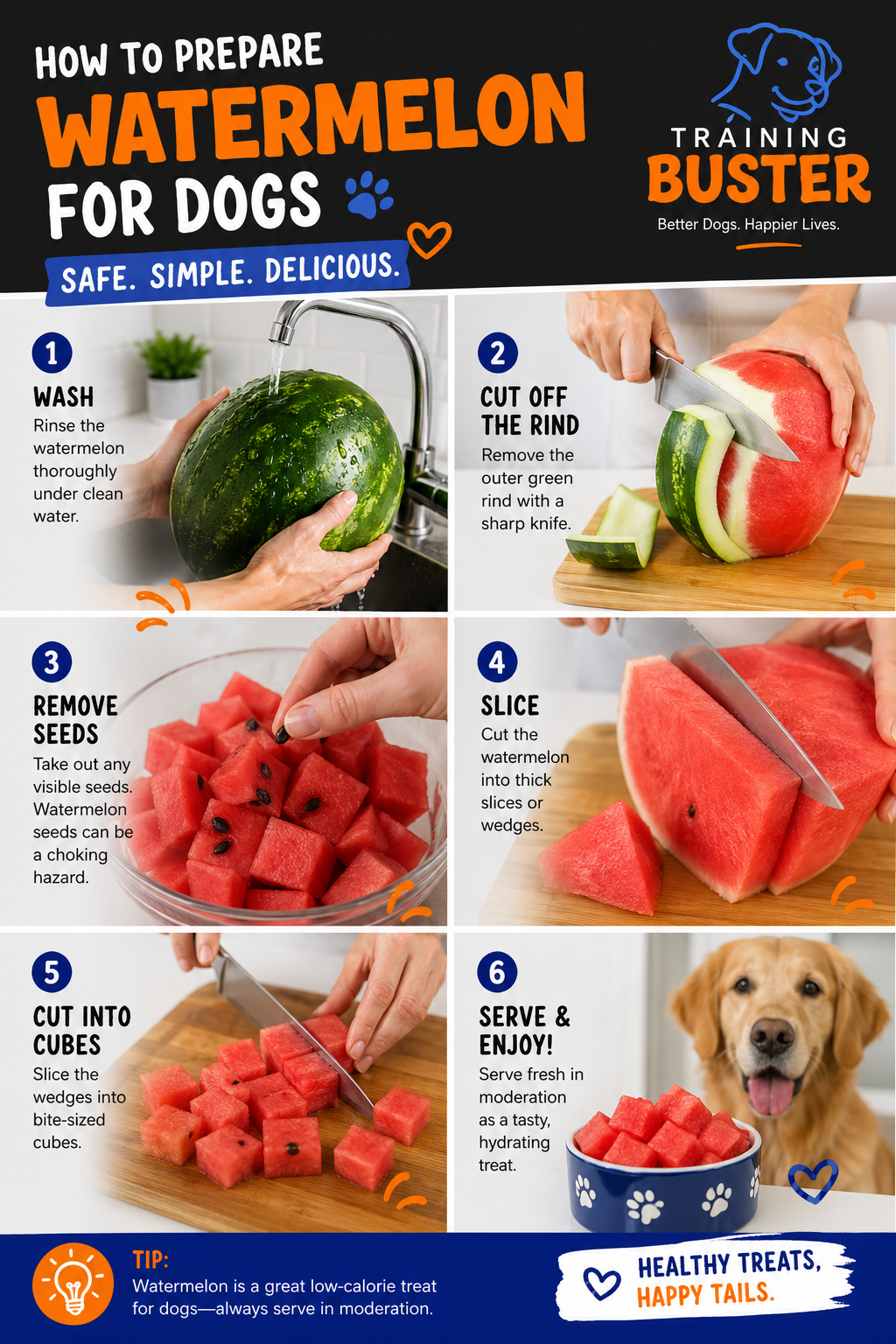
Now that you know the answer to “can dogs eat watermelon” is yes, let’s talk prep. Getting it ready is easy, but you must follow these steps to keep your dog safe.
Step 1: Wash the watermelon
Before you cut it, scrub the outside with water. Even though you’ll remove the rind, bacteria and pesticides can spread from the knife to the flesh. A quick wash solves that.
Step 2: Cut away the rind
Slice off the thick green and white part. Only the soft red flesh is safe. The rind is tough and can cause choking or blockages. In our research, every source agreed that rind is a no-go.
Step 3: Remove all seeds
This includes the black seeds and any white ones. Seeds can block the intestines. Plus, black seeds have a tiny amount of cyanide. While a dog would need to eat a lot to get sick, it’s better to just remove them.
Pro Tip: If you’re short on time, buy seedless watermelon. It still has a few white seeds, but much fewer than regular ones. Just pick those out quickly.
Step 4: Cut into small pieces
Size matters. For a small dog like a Chihuahua or Yorkie, cut cubes about 1 cm wide. For a Lab or Golden Retriever, you can go up to 2 cm. Always make sure the pieces are small enough to swallow without chewing.
Our research from Purina confirms: “Bite-sized chunks are the way to go. Each piece should be about 1 inch long by 1 inch tall by one-fourth inch thick or smaller, depending on your dog’s size.” That’s about 2.5 cm x 2.5 cm x 0.5 cm.
You can serve the cubes straight from the fridge , that’s a nice cooling treat. Or you can add them to your dog’s water bowl, but remember to remove leftover pieces before they break down (within a few hours).
One more thing: never give your dog watermelon from a can or jar. Those often have added sugar or syrups. And definitely avoid any watermelon-flavoured candy or snacks , they might contain xylitol, which is deadly for dogs.
If you want to store leftover watermelon, keep it in an airtight container in the fridge for up to three days. Beyond that, it gets mushy and might spoil.
Bottom line: Always wash, peel, deseed, and cube watermelon into bite-size pieces before giving it to your dog , never feed the rind or seeds.
 Regenerate
Recommended Portion Sizes and Feeding Guidelines
How much watermelon can you give? That depends on your dog’s size. The general rule: treats should make up no more than 10% of your dog’s daily calories. For a medium-sized dog (20-30 lbs), that’s about 50-70 calories from treats per day. A cup of watermelon has about 50 calories, so you’re looking at roughly ½ cup of cubes for a moderate treat, but only if that’s the only treat that day.
Here’s a simple size guide based on our research and vet recommendations:
| Dog Size | Weight Range | Recommended Serving |
| Tiny (Chihuahua, Toy Poodle) | Under 10 lbs | 1-2 small cubes (about 1 tablespoon) |
| Small (Bichon, Mini Schnauzer) | 10-25 lbs | 2-4 cubes (¼ cup) |
| Medium (Beagle, Corgi) | 25-50 lbs | 4-6 cubes (½ cup) |
| Large (Lab, Golden Retriever) | 50-90 lbs | 6-10 cubes (¾ cup) |
| Giant (Great Dane, Mastiff) | 90+ lbs | 10-12 cubes (1 cup max) |
These are maximums. Start with half a serving the first time. Watch for any signs of stomach upset like loose stool or gas. If your dog tolerates it well, you can gradually increase to the amounts above.
Key Takeaway: Watermelon should be an occasional treat, not a daily snack. A few cubes once or twice a week is plenty.
One important note: the natural sugar in watermelon is high compared to other fruits. Even though it’s not added sugar, it can still spike blood sugar in dogs with diabetes. If your dog has diabetes or is overweight, click here to on Best Calming Treats for Dogs (2026): Top 10 Picks & Safety Guide, which includes low-calorie options that work better for diabetic dogs.
Also, don’t give watermelon right before a meal. It might fill your dog up and make them skip dinner. A good time is after exercise on a hot day. Then it helps replace fluids and cools them down.
If you’re unsure, remember the 10% rule. That’s the total treats, including watermelon, as a percentage of daily calories. So if you give your dog a few cubes of watermelon, skip the other treats that day.
Bottom line: Portion size depends on your dog’s weight. Start small and adjust based on how your dog reacts.
Special Considerations for Puppies and Dogs with Health Issues
Puppies have delicate stomachs. Their digestive systems are still developing. So can dogs eat watermelon when they’re puppies? Yes, but extra caution is needed. Start with a piece no bigger than your pinky nail. Wait 24 hours to see if they have loose stool or vomiting. If all goes well, you can slowly increase the size.
Our research shows that all the standard guidelines apply to puppies too: remove seeds and rind, cut small, and feed in moderation. The same 10% rule holds, but puppies also need a balanced growth diet. Watermelon shouldn’t replace their puppy food.
Now let’s talk about health conditions. Here’s a quick reference:
- Diabetes: Watermelon has a high glycemic index. The natural sugar can spike blood glucose. Either skip it entirely, or give just a tiny cube and monitor your dog’s blood sugar. Better yet, ask your vet.
- Kidney disease: Watermelon is high in potassium. Dogs with kidney issues sometimes need to limit potassium. Check with your vet first.
- Obesity/weight loss: Watermelon is low in calories, perfect! But it still has sugar, so keep portions small. Use it as a low-cal reward instead of high-fat treats.
- Allergies:Food allergies to watermelon are rare but possible. If your dog gets itchy, has ear infections, or vomits after eating it, stop and call your vet.
Pro Tip: If your dog has any chronic condition, always consult your vet before introducing new foods. That includes watermelon.
One more thing about the cyanide myth. Some sources say black watermelon seeds contain cyanide. They do, but in such tiny amounts that a dog would have to eat dozens of seeds to get sick. Still, it’s easy to remove them, so why risk it? Just pick them out.
For dogs with sensitive stomachs, the high water and sugar content can cause diarrhoea if eaten in large amounts. A few cubes are fine, but a whole slice might cause issues. If you notice loose stool after feeding watermelon, reduce the portion or stop entirely.
Bottom line: Puppies and dogs with health conditions can eat watermelon, but always start with a tiny amount and watch for reactions, and get your vet’s OK first.
Creative Watermelon Treats and Summer Fun
Want to do more than just hand your dog a cube? There are lots of fun ways to use watermelon as a treat. And yes, all these ideas follow the safety rules we covered.
Watermelon pupsicles
This is the most popular DIY treat. Take seedless watermelon (or pick out the seeds), blend the flesh with a couple of spoonfuls of plain Greek yogurt (no sugar, no xylitol), and pour into silicone molds or an ice cube tray. Freeze for 4 hours. That’s it. Your dog gets a creamy, icy snack that’s full of protein and hydration. Two sources from our research recommend this exact method.
Watermelon water
Drop a few small cubes of watermelon into your dog’s water bowl. The fruit flavours the water naturally. Just remove any leftover pieces after a few hours so they don’t spoil and grow bacteria. This is the simplest idea , no prep, no dishes, just some fruity hydration.
Frozen watermelon whole chunk
Freeze a large wedge of watermelon (rind removed, seeds out). Let your dog lick and gnaw on it. This keeps them busy for 10-15 minutes. But supervise, if your dog bites off big pieces, they could choke. Best for large dogs with gentle chewers.
2out of 3 frozen treat ideas from our research included yoghurt, transform watermelon into a protein-rich snack by adding plain Greek yogurt.
Watermelon training treats
Cut watermelon into tiny cubes, about the size of a pea. Use them as rewards during training sessions. They’re soft, so they won’t break your dog’s focus. And they’re low calorie, so you can give 10-15 of them without overfeeding.
You can also mash watermelon and spread it on a lick mat, then freeze it. Your dog will spend 20 minutes licking it clean. Great for hot days or for calming down after a walk.
One recipe from Belly Full suggests blending watermelon with Greek yogurt and a teaspoon of honey. But honey is optional , the watermelon is usually sweet enough. Just never add any artificial sweeteners, especially xylitol.
“These frozen watermelon dog treats are probably my dog Grace’s very favorite treat that I’ve made for her so far.” , For the Love of Cooking blog
Remember, these treats are still treats. A pupsicle counts toward the 10% daily treat limit. One medium pupsicle is about 1/8 of a cup, so it’s fine for most dogs.
Bottom line: With a little creativity, you can turn watermelon into frozen pupsicles, training bites, or flavoured water , but always keep the portions small and sugar in mind.
Frequently Asked Questions
Can dogs eat watermelon seeds?
No, dogs should not eat watermelon seeds. The black seeds can cause intestinal blockages, especially if swallowed in large amounts. They also contain trace amounts of cyanide, though it would take many seeds to cause poisoning. The white seeds are less risky but still best removed. Always pick out all seeds before serving watermelon to your dog to be safe.
Can dogs eat watermelon rind?
No, the rind is not safe for dogs. It is tough and can be a choking hazard or cause an intestinal blockage. Some sources note the rind has fiber and nutrients, but the risks outweigh the benefits. Even small pieces can cause stomach upset. Always cut away the entire rind and serve only the soft, red flesh.
How much watermelon can I give my dog?
It depends on your dog’s size. For a small dog (under 10 lbs), start with 1-2 small cubes (about 1 tablespoon). For a medium dog (25-50 lbs), 4-6 cubes (half a cup). For a large dog (50-90 lbs), up to 10 cubes (three-quarters of a cup). Treats should not exceed 10% of daily calories. Introduce slowly and watch for digestive upset.
Can puppies eat watermelon?
Yes, puppies can eat watermelon, but with extra caution. Their digestive systems are still developing, so start with a very small piece , about the size of your pinky nail , and wait 24 hours to see if they react. Remove all seeds and rind. Treats should be no more than 10% of their daily intake. When in doubt, ask your vet.
Is watermelon good for dogs on a diet?
Yes, watermelon is a low-calorie treat , about 50 calories per cup , which makes it a good choice for overweight dogs. It has no fat or cholesterol. But it does contain natural sugar, so keep portions small. Use a few cubes as a reward instead of high-calorie commercial treats. Always factor it into the 10% treat allowance.
Can dogs be allergic to watermelon?
Yes, food allergies to watermelon are possible but rare. Signs include itching, hives, vomiting, or diarrhoea after eating it. If you notice any of these symptoms, stop feeding watermelon and contact your vet. Most dogs tolerate it well, but it’s smart to introduce any new food gradually and watch for reactions.
What if my dog eats a whole watermelon seed?
One or two seeds are usually not a problem. They will pass through the digestive system without issue. The real risk is with dozens of seeds, which could cause a blockage. If your dog ate a large number of seeds or shows signs of vomiting, loss of appetite, or abdominal pain, call your veterinarian immediately.
Can dogs have watermelon juice from the store?
No, store-bought watermelon juice or snacks often contain added sugars, preservatives, or artificial sweeteners like xylitol, which is toxic to dogs. Even natural watermelon juice from a carton may have extra sugar. The safest option is to squeeze fresh watermelon yourself, with no additives. Better yet, serve whole cubes.
Conclusion
So can dogs eat watermelon? Yes, absolutely , as long as you follow a few simple rules. Only feed the red flesh. Always remove the seeds and rind. Cut it into small, bite-sized pieces. And keep the portions small , remember the 10% rule. Watermelon is a hydrating, low-calorie treat that’s perfect for hot summer days. It gives your dog vitamins A, B6, C, potassium, and lycopene. And it’s a great way to help them cool down after a walk or play session.
But not every watermelon product is safe. Stay away from rind, seeds, and any commercial watermelon-flavoured snacks or juices , they may contain xylitol or sugar. Homemade frozen pupsicles with plain Greek yogurt are a fantastic alternative. And always introduce any new food slowly, especially for puppies or dogs with health issues like diabetes or kidney disease.
We hope this guide answered all your questions about watermelon and dogs. For more tips on feeding your pet, on What Joint Supplements to use for a Cavapoo if you have that breed. Or explore the rest of Training Buster for more healthy treat ideas. Your dog’s health is worth the extra effort. Happy summer snacking!